site.btaBulgaria Marks Radio and Television Day on May 7
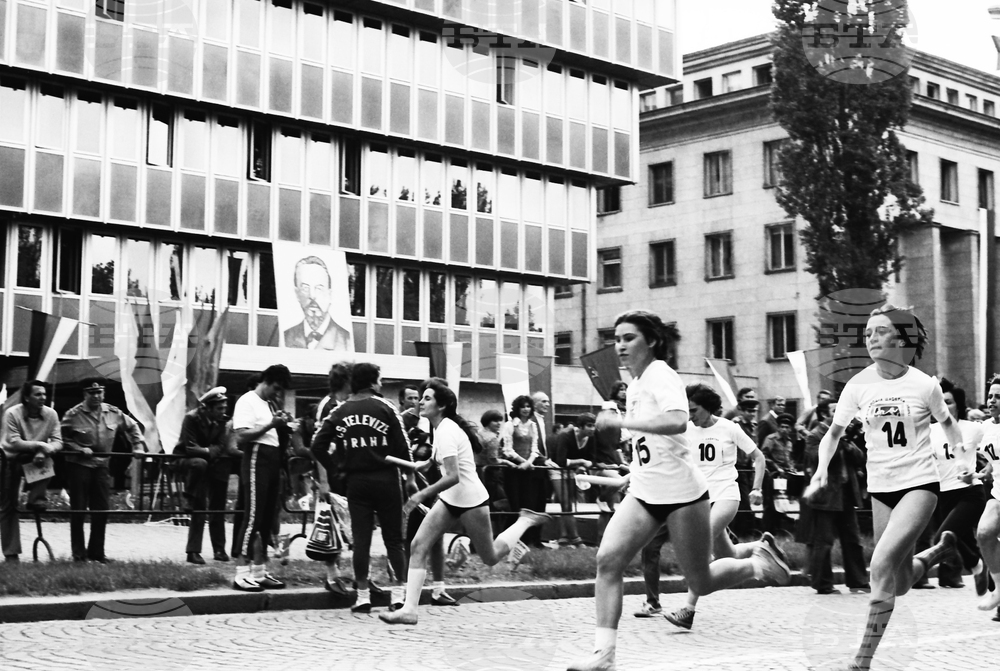
Bulgaria marks May 7 as International Radio and Television Day, the professional holiday of electronic media and communications workers.
The date is linked to the discovery of radio by Russian scientist and physicist Professor Alexander Stepanovich Popov. On May 7, 1895, he gave the first demonstration before the Russian Physical and Chemical Society of a device he had invented for transmitting and receiving information electrically over long distances without wires. In 1899, Popov added a telephone receiver to the radio receiver, making it possible to receive signals by sound.
In Bulgaria, the day has been marked since 1945 as Radio Day and since 1968 as Radio and Television Day.
The holiday brings together all professionals, journalists, technicians and engineers, who keep radio and television running.
The first mention in the archives of the Bulgarian News Agency (BTA) of Radio Day in Bulgaria is a news item from 1949. The item gives information about the forthcoming marking of the holiday through exhibitions of radio equipment, a concert broadcast on Radio Sofia and formal meetings.
In the following decade, Radio Day was marked on an increasingly large scale in Bulgaria because it was linked to technical progress and easier access to information in remote settlements.
The following is a review of the celebrations of Radio and Television Day in Bulgaria in the second half of the 20th century and related events carried in BTA’s Internal Information bulletin:
On the Occasion of Radio Day
Sofia, May 6, 1949 (BTA) On the occasion of Radio Day, the General Directorate of Radio Broadcasting and Radiofication in Bulgaria, the Ministry of Posts, Telegraphs and Telephones, the Radio Amateur Department at the People’s Union for Sport and Technology and ELPROM are organizing a formal meeting on May 7, at 7:30 p.m., in the concert studio of Radio Sofia.
The meeting will be opened with an address by Committee for Science, Art and Culture Chair Minister Valko Chervenkov. A report on the work of the great Russian physicist and discoverer of radio, Popov, will be delivered by Engineer Marinov, Head of the Studio Department at Radio Sofia I.
The programme will feature the State Radio Orchestra, the State Radio Choir, the State Radio Quartet Avramov, the Radio Sofia soloists Lyuba Encheva and Yordanka Dimcheva, the Rosna Kitka group, folk singer Gyurga Pindzhurova, the Folk Orchestra, and artists from the Radio Theatre and the Children’s Radio Theatre. Admission is free.
The meeting and the concert will be broadcast on Radio Sofia I, Radio Varna and Radio Stara Zagora.
***
Sofia, May 7, 1949 (BTA) On the occasion of 54 years since the discovery of radio, the People’s Union for Sport and Technology, Radio Amateur Committee, together with the General Directorate of Radio Broadcasting, the Ministry of Posts, Telegraphs and Telephones and ELPROM, are organizing the first national radio exhibition, which will show the achievements of radio amateurs in Bulgaria, the radio industry and the use of radio in various areas of life.
The exhibition will open on May 3 in the hall of the Union of Bulgarian Artists, 125 Rakovski Street. Admission is free.
***
Radio Becomes Accessible to the Broad Masses in Bulgaria
Sofia, May 7, 1955 (BTA) Working people in Bulgaria are marking the 60th anniversary of the great discovery of Russian scientist A. S. Popov. Radio is decisive progress in the field of radio broadcasting and wired radiofication. Radio in Bulgaria has already become accessible to the broad masses and is used as a powerful means for the cultural advancement and political education of the people. Through it, working people learn every day about achievements in industry, agriculture and culture, and about events around the world.
Before September 9, there was no wired radiofication in the country.
In 1947, the first two radio amplifier installations and loudspeakers, donated by the Soviet Union, were installed. Since then, wired radiofication has developed at a very fast pace, and by the end of 1954 the number of radio relay centres had grown to 1,057, with 230,000 radio points. Working people in Bulgaria also had hundreds of thousands of radio receivers.
Bulgaria’s radio industry made a particularly strong contribution to the mass spread of radio and wired radiofication. In a short time, the team at the newly built Kliment Voroshilov Low-Voltage Plant mastered the production of several types of radio amplifier installations, different types of loudspeakers and microphones. The plant produced several models of radio receivers, Urozhay radio stations and other equipment.
Radio was already used in the drive for a high harvest. Many machine and tractor stations had Urozhay radio stations, which made it easier to carry out farm work in an exemplary way.
Bulgarian fishermen also received special radio stations to make their work at sea easier.
The number of radio amateurs in the country was growing quickly. Bulgaria already had an organized radio amateur movement. While in the past there was not a single amateur receiving and transmitting station, many collective amateur radio stations were operating in the country.
***
Formal Concert in the Capital on the Occasion of Radio Day
Sofia, May 7, 1955 (BTA) On the evening of May 7, a formal concert took place in Bulgaria Hall on the occasion of Radio Day, organized by the Ministry of Posts, Telegraphs and Telephones and the Ministry of Culture.
The concert was attended by prominent public figures, people of science and culture, distinguished workers, workers, technicians and engineers from Bulgaria’s radio industry, Radio Sofia and postal employees, and many working people from the capital.
A report on Radio Day was delivered by Minister of Posts, Telegraphs and Telephones Tsola Dragoycheva. Dragoycheva said that 60 years earlier, on that day, Russian scientist A. S. Popov demonstrated the world’s first radio receiving device. Radio is not only a remarkable and reliable means of communication, but also a whole broad field of science and technology. In the homeland of radio, the Soviet Union, this branch of science is developing at a very fast pace. In the USSR alone, 3,350,000 radio receivers of various types will be produced this year. Television in the Soviet Union is also expanding every year.
Bulgaria is doing everything possible to develop its radio engineering base more quickly. The Hristo Botev National Radio Transmitter was rebuilt and improved the quality of its broadcasts. The radio transmitters in Stalin, now Varna, and Stara Zagora were replaced with new, more powerful ones. The number of concert radio studios was increased. Bulgarian radio stations then broadcast more than 85 hours a day, including 60 hours for the country and 25 hours abroad. Every day, in nine bulletins, they provided broad and truthful information about life and events in Bulgaria and abroad.
Artists from the National Theatre Krastyo Sarafov, the National Opera, the Bulgarian Choir Chapel and the State Radio Symphony Orchestra performed a rich programme.
***
May 7, Radio and Television Day
Sofia, May 6, 1968 (BTA) Following established traditions, May 7 is celebrated as Radio and Television Day. The formal concert on the evening of May 6 was dedicated to this holiday and was organized at Georgi Kirkov Hall in the Party House by Bulgarian Radio and Television, the Union of Bulgarian Journalists, the Ministry of Communications and the State Economic Association Radioelectronics and Communications Industry.
The programme featured the musical ensembles of Bulgarian Radio and Television, the Svetoslav Obretenov Choir Chapel under chief conductor Georgi Robev, and the opera and symphony orchestra conducted by honoured artist Atanas Margaritov, with soloists Blagovesta Karnobatlova, Dimitar Petkov and honoured artist Emil Kamilarov.
The Folk Song Ensemble, led by Dimitar Dinev, the Haydushka Pesen group and the Balkanton orchestra also took part.
***
Construction of a National Radio and Television Centre Begins
Comrade Todor Zhivkov Turns the First Sod
Sofia, May 8, 1975 (BTA) The first sod was turned in the capital on May 8 for the National Radio and Television Centre. Todor Zhivkov, First Secretary of the Central Committee of the Bulgarian Communist Party and Chair of the State Council, arrived at the site and was given an exceptionally warm welcome.
The National Radio and Television Centre will cover an area of 22 hectares and will broadcast 2,680 hours of television and 10,240 hours of radio programming a year. The facility, unique for Bulgaria, will include a television block, a television film production centre, a radio production centre, an administrative and production building, an energy centre, an outside broadcasting block and other sections. Its equipment will be supplied gradually with modern Soviet technology.
The architectural and technological design was the joint work of Sofstroy, Isproekt, Soviet design institutes and an institute from the German Democratic Republic.
The formal rally on the occasion of the first sod was opened and chaired by Georgi Yordanov, First Secretary of the Sofia City Committee of the Bulgarian Communist Party and member of the Secretariat of the Central Committee of the Bulgarian Communist Party.
Committee for Television and Radio Chair Todor Stoyanov expressed the team’s gratitude for the warm care given by the Party, the government and personally by Zhivkov.
Hero of Socialist Labour Nesho Atanasov, Head of the Industrial Construction Department, read out the builders’ pledge to complete the project early and to a high standard.
Zhivkov congratulated radio and television workers and wished them new successes on the front line of the ideological front.
Zhivkov then turned the first sod for the National Radio and Television Centre.
The ceremony was attended by Georgi Bokov, member of the Secretariat of the Central Committee of the Bulgarian Communist Party, Chair of the Union of Bulgarian Journalists and editor-in-chief of Rabotnichesko Delo; Minister of Finance Dimitar Popov; Minister of Construction and Architecture Grigor Stoichkov; Committee for Art and Culture Chair Pavel Matev; Yancho Georgiev, head of the Mass Media Department of the Central Committee of the Bulgarian Communist Party; Executive Committee of the Sofia City People’s Council Chair Ivan Panev; leaders of the Committee for Television and Radio; and many citizens.
***
Exhibition From the History of Radio
Sofia, May 4, 1995 (BTA) The exhibition From the History of Radio opened on May 4 in the hall of the National Polytechnic Museum in Sofia. It was dedicated to the 100th anniversary of the first experiments in transmitting and receiving electromagnetic waves, the 65th anniversary of Bulgarian radio broadcasting and the 60th anniversary of Bulgarian National Radio.
The exhibition included a working reconstruction of the experiment by Heinrich Hertz, the first to prove the existence of radio waves. It showed the devices of Popov and Guglielmo Marconi, which still spark lively debates over who invented radio.
Among the most attractive exhibits were some of the first radio sets imported into Bulgaria, brought in 1924 on a State order from the French company Radiola, and the first receiver imported from Paris for the needs of exact timekeeping at the Astronomical Observatory in 1925.
A large part of the exhibition was dedicated to Bulgarian production. Visitors could see almost all radio receivers produced in Bulgaria until 1948, including Tulan, Bralt, Hertz, Ira, Admiral, Kaproni, Radiovesti and others.
/КТ/

news.modal.header
news.modal.text