site.btaBTA, European Parliament Three-day Training for Young Journalists Concludes
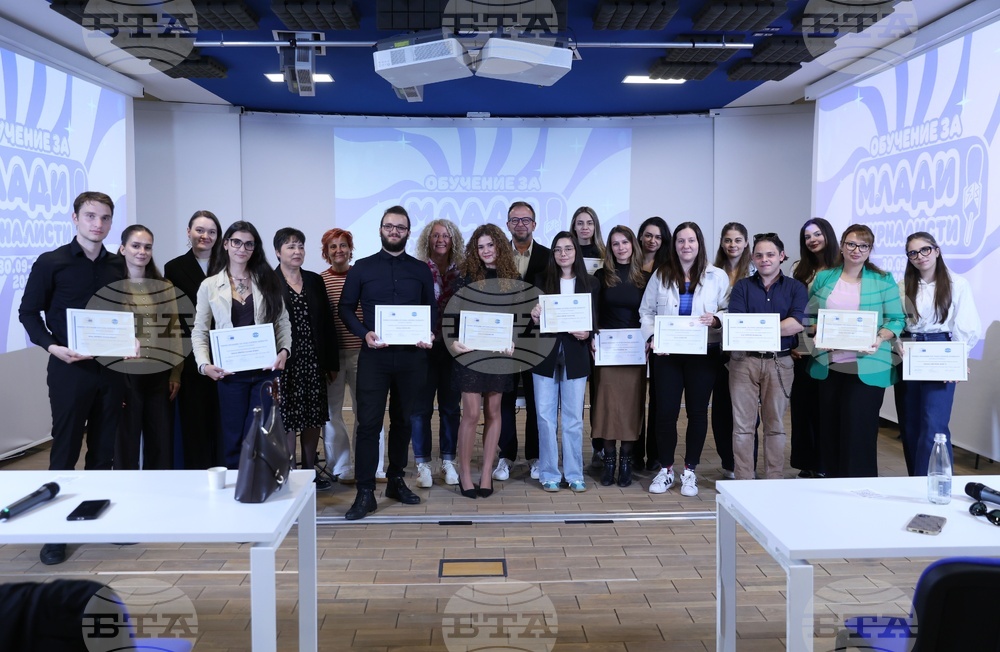
A three-day training programme for young journalists, jointly organized by the Bulgarian News Agency (BTA) and the European Parliament Liaison Office in Bulgaria, has concluded. The training was held at BTA’s MaxiM Hall.
The final day of the programme covered topics including the work and challenges facing media correspondents in Brussels, a discussion with MEP Andrey Kovatchev on geopolitical and economic issues and the role and activities of the European Union, as well as useful tools available to journalists covering the work of the European Parliament.
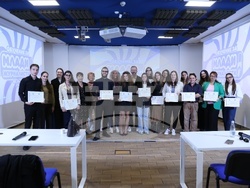
The young journalists’ training programme took place from September 30 to October 2 and brought together 15 journalists from various Bulgarian media outlets. Its aim was to familiarize participants with the functioning of EU institutions, with a particular focus on the European Parliament, European policies and their implementation in member states based on EU values.
The programme is divided into two modules – national and European. The national module provided broader knowledge of the competences of the European institutions, as well as EU legislation and policies. The European module will take place in Brussels in 2027, with participants selected based on their performance in the practical assignments.
BTA’s Brussels correspondent Nikolay Jeliazkov spoke about the work of journalists at the European Parliament. Drawing on his many years of experience covering EU institutions, he offered the young journalists advice on establishing contact with MEPs and press officers, the areas of the European Parliament accessible to journalists, how to obtain accreditation and what to prioritize when covering an event.
He also addressed the role of journalists in using artificial intelligence, stressing that reporters need to set clear boundaries around how the technology is used. Jeliazkov told participants that journalism is a vocation and added that journalists need to be versatile and able to cover a wide range of topics.
As part of the training, participants were given a practical assignment to interview MEP Andrey Kovatchev (EPP/GERB). The discussion focused on the EU’s role in global politics and the global economy, innovation, the idea of a federal Europe, social media, hybrid warfare and the EU’s future enlargement.
"The European Union is a union of sovereign states that have voluntarily decided that the motto United We Stand Strong means it is better to be together than for each country to try to fend for itself in an extremely uncertain world," Kovatchev said.
According to him, issues such as EU enlargement should not be decided by qualified majority voting because this is "an internal policy with a geopolitical dimension". He said the EU should also move towards the direct election of its leadership in order to become more competitive economically and politically.
Asked about his views on Turkiye’s involvement in various EU initiatives, including the SAFE defence programme, Kovatchev, who is a member of the European Parliament’s Delegation to the EU-Turkiye Joint Parliamentary Committee, said: “I believe that Turkiye, as our direct neighbour, will remain our neighbour regardless of who its president is, and we need to have exceptionally good relations with the country. Accordingly, we should integrate it at every possible level. We should not push Turkiye away and, simply because we do not like those currently governing in Ankara, push the country towards other alliances involving China, Iran and Russia.”
Biliana Tzarnoretchka, Press Officer of the European Parliament Liaison Office in Bulgaria, presented the services and tools available to journalists covering the work of the European Parliament. She also spoke about the work of the Parliament’s spokesperson and press officers.
"Information from the European Union is now also part of Bulgaria’s domestic agenda, and it is time we treated it as such," Teodor Stoychev, head of the European Parliament Liaison Office in Bulgaria, said. He added that the better journalists understand the EU, the better their audiences will understand what is being discussed and why it is important. Stoychev highlighted the office’s cooperation with BTA and added that similar training programmes would continue to be organized.
BTA Deputy Director General Evgenia Drumeva wished the young journalists who took part in the training every success.
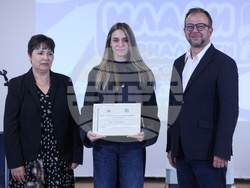
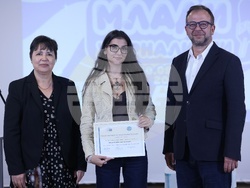
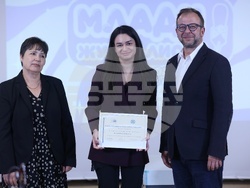
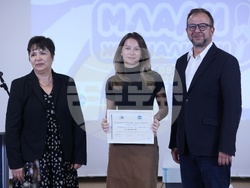
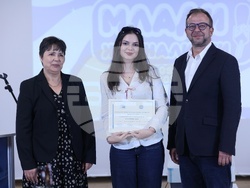
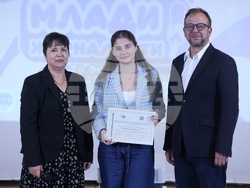
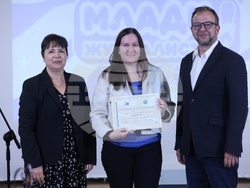
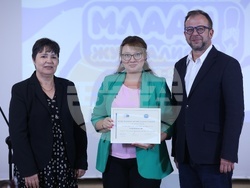
At the end of the three-day event, the participants received certificates confirming their successful completion of the programme.
/RD/
Additional








news.modal.image.header
news.modal.image.text
news.modal.download.header
news.modal.download.text
news.modal.header
news.modal.text