site.btaMedia Review: September 18
POLITICS
Bulgaria will buy additional anti-drone systems to protect its strategic sites and critical infrastructure facilities, MediaPool.bg reports, covering a meeting of the Security Council under the Council of Ministers, held on Friday morning. The website quotes Defence Minister Dimitar Stoyanov as saying that a decision was made to allocate additional funding for the purchase of anti-drone systems.
* * *
Bulgaria's pardon system is based on the most widely used model and does not need additional legislative regulation, said Iva Pushkarova, a criminal law professor and member of the Pardon Commission under former president Rosen Plevneliev, interviewed by Bulgarian National Radio on Friday morning. Pushkarova said: "A Bulgarian model that has been built in the legal environment has received recognition from the European Court of Human Rights (ECHR); it is considered the best one in terms of transparency. Its functioning has not obviously been hindered by the legal system." The professor admitted, however, that the system recognized by the ECHR as good practice has been compromised recently.
The pardoning of people convicted for drug-related offences gained prominence in the public eye following recent disclosures about cases involving incumbent Bulgarian President Iliana Iotova in her former capacity as vice president.
* * *
The prospect of having a single standard textbook for every school subject, and suspicions that the restriction may be used for political purposes, are discussed by former education and science minister Krasimir Valchev in an article published on ClubZ.bg. Valchev raises the questions of whether the status of Crimea will be reinterpreted in the geography book, and whether the lenient view on the former communist regime will be reimposed in the history book.
Valchev argues that when different students use different textbooks for the same subject, they are not taught different things; the principle of uniformity of learning is determined by the syllabuses, not the books. The instructive function of the Bulgarian school system may have deficiencies but not because of the books. In the case of a single standard textbook, the decisions about what is better for the school-goers will be made by civil servants, not by teaching professionals, Valchev warns.
INTERNATIONAL AFFAIRS
President Iliana Iotova was interviewed by bTV on Thursday, and her remarks were covered by other media as well. According to Segabg.com, Iotova "did not dare call Russia an aggressor". "There is no point in such classifications anymore," she told the TV station. "It's a war! It's a war! There are two sides to a war," she emphasized. Noting that Russia started an "invasion" five years ago, the President underlined that "we have a far bigger task at hand, to stop [the war] by all means". According to Iotova, the main difference between her and the other contenders in the upcoming Bulgarian presidential election on October 25 is her conviction that Europe must participate in the peace talks, including by making a proposal about what the peace agreement should look like. Asked whether Ukraine should cede territories, Iotova said "this is subject to negotiation".
* * *
Both Russia and Ukraine pose a risk to Bulgaria's national security because they are not ending the war between them, MP Rumen Milanov of Progressive Bulgaria said during Friday's morning talk show on BNT1, the main channel of Bulgarian National Television. Milanov said Europe should play a more active role in the effort to end the conflict through negotiations.
* * *
"Efficiency or Resilience? Democracies Can Only Pick One," caps an analysis which appears on Dnevnik.bg. It was written by Joachim Klement, Managing Director for Strategy, Economics and ESG at Panmure Liberum, an independent investment bank in London. The analysis was previously published by Reuters. Klement writes that efficiency has long been the prime objective of business and government policy, but the pandemic, trade wars and armed conflicts have called this into question, stressing the importance of resilience. Yet this too comes with a cost, and it's one many elected leaders aren't eager to pay.
The pandemic revealed the flaws of the just-in-time philosophy by showing the world what happens if just-in-time turns into "two-days-late", the author says. He notes that supply-chain disruptions were a key contributor to the 2022 inflation spike. This underscored the high cost of "low-cost" efficiency. Businesses are increasingly having to sacrifice efficiency to increase resilience now that critical trade routes – like the Strait of Hormuz – have been closed without warning, while supplies from huge exporters have repeatedly – and sometimes unexpectedly – been subject to tariffs or economic sanctions. Companies have scrambled to find new supplies of energy and other goods.
However, diversification of imports and trade links comes at a price, Klement goes on to say. Too few politicians in any democracy appear willing to tell voters the unfortunate truth: policies that can help ensure that a country remains resilient in the face of geopolitical and economic challenges aren't going to be painless. Unless democracies find a way to make the costs of resilience politically sustainable, they risk ceding an advantage to less democratic systems that can pursue long-term industrial and strategic goals with fewer electoral constraints. That's a price elected governments simply can't afford, Klement says.
ECONOMY
The government has named former ombudsman Maya Manolova-Naydenova to head the Commission for Consumer Protection until the expiry of the current mandate. MediaPool.bg notes that Manolova, a former MP from the Bulgarian Socialist Party and later leader of the populist party Rise Up!, had studied history in Moscow and legal sciences at the University of National and World Economy in Sofia. One of her most recent initiatives was a mobile application called Antispekula allowing people to file alerts against high prices. The website has found that the Antispekula platform is not operational at present. The article says that Manolova became particularly popular after she became ombudsman in 2015, a position in which she was very active.
* * *
The government has decided to launch ambitious public-private partnerships (PPPs), Segabg.com says. To this end, the incumbents are proposing an entirely new law to regulate PPPs. According to the website, experience shows that all-new legislation is hardly necessary. What is needed is to hold procedures by strictly following the rules, to show that a PPP can be implemented transparently based on clear rules and fair competition in selecting a partner. The author recalls that the Rosen Zhelyazkov cabinet (January 2025 – February 2026) studied in detail foreign PPP systems and particularly the German practice.
* * *
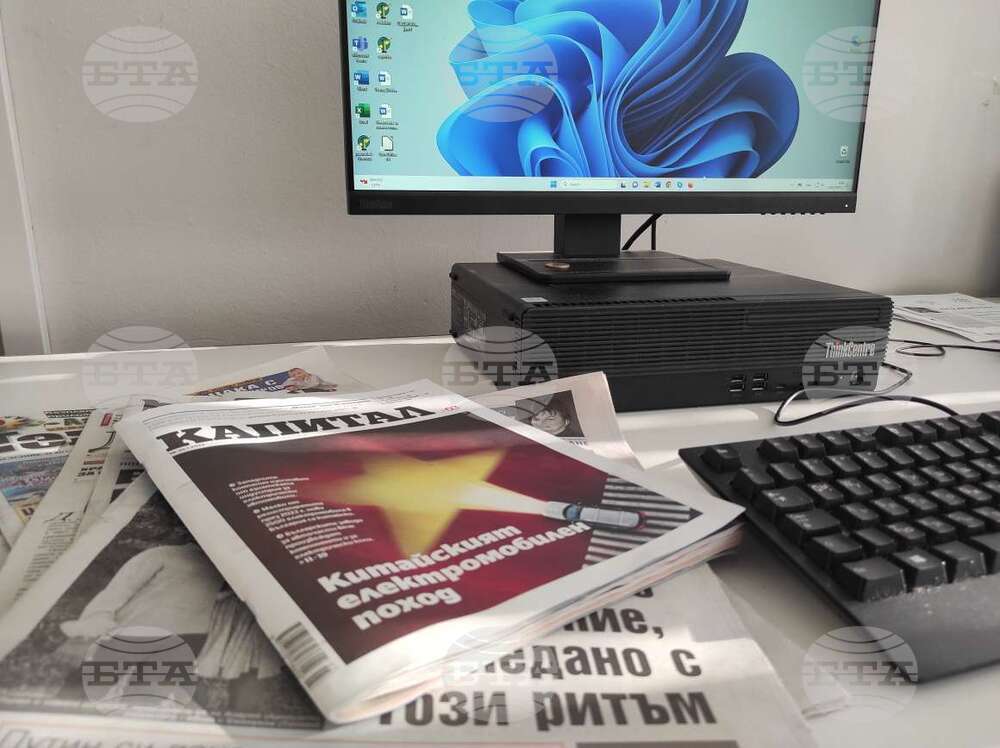
Bulgaria will have a Chinese motor vehicle assembly plant again, and it will go into operation next year, Segabg.com writes. According to DizzyRiders.bg, the plant will be located in Bahovitsa, near the northern town of Lovech, the same place where vehicles of China's Great Wall Motor (GWM) were assembled years ago. GWM's local partner, Bulgarian Automobile Industry (BAI), said the new operation will be for electric and hybrid vehicles. BAI has begun recruiting workers.
* * *
Sofia's Urban Mobility Centre (UMC) is undergoing one of its biggest digital changes since the introduction of the electronic fare collection system, 24chasa.bg says. The focus is on making more transport services in the city accessible without visiting physical offices, providing more accurate information for passengers and ensuring greater ease and reliability of travel and parking. UMC Director Rumyana Milova tells the website in an interview that ever more services are becoming accessible through people's telephones and other smart devices. She recalls that the Sofia2Go app for public transport in the capital was launched in May. It can be used to pay and manage public transport fares, track travel history, check timetables and plan trips. Passengers can use a personalized season ticket to connect to the app through a QR code, while supported devices can be employed to obtain a digital ticket via Google Wallet. Sofia2Go is constantly updated based on feedback from customers, Milova says.
According to her, a vast share of public transport trips are made using the electronic fare collection system. Ticket punching boxes have been relegated to the past as Sofia's public transport system celebrates its 125th anniversary. Students' and retired people's travel will be further facilitated by the end of this month. Public transport is becoming a preferred option; with the development and expansion of the underground railway, the Metro, the daily number of public transport rides has exceeded 500,000. As for car parking, the Sofia Plus app is evolving. The network of buffer parking areas at Metro stations is being expanded, Milova says.
/VE/
news.modal.header
news.modal.text