site.btaWest Nile Virus Circulates Actively Across Balkans: What Countries Are Most Affected
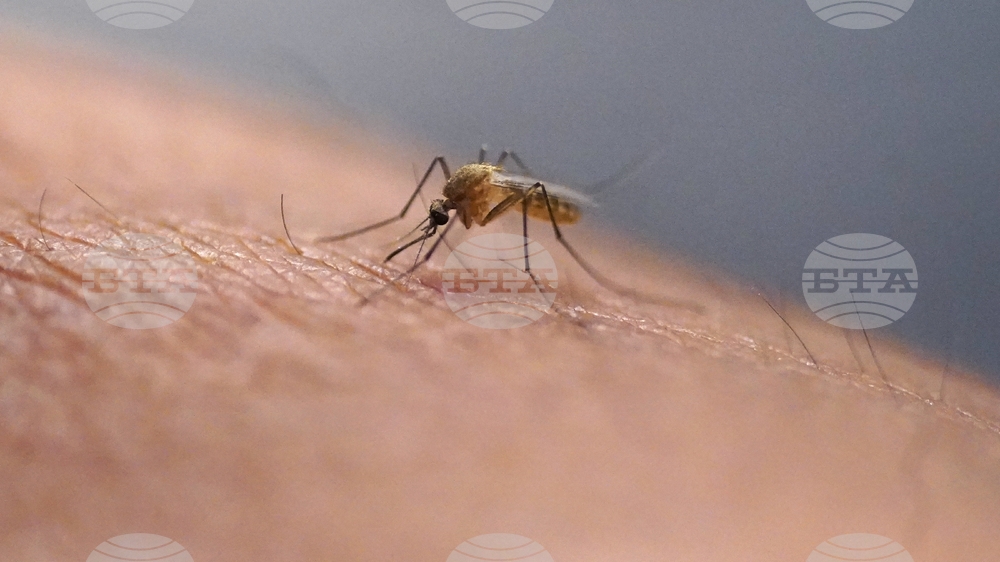
Balkan countries reported the active circulation of the West Nile virus this season. Bulgaria registered its first case of the year, according to data from the National Centre of Infectious and Parasitic Diseases for the week of August 17–23, 2026. One case was recorded in Bulgaria between January 2025 and August 23, 2025.
Particular attention in the Balkans is focused on the situation in Greece. According to the World Health Organization (WHO), the country has recorded the sharpest increase in reported cases in Europe in recent weeks. Data from the European Food Safety Authority through August 5, placed Greece second only to Italy in terms of the number of cases, accounting for 26.5% of all cases reported in Europe, compared with 56.7% for Italy.
The WHO Regional Office for Europe has urged countries to step up surveillance of mosquito populations and raise public awareness of measures to protect against infection.
West Nile virus is transmitted to humans primarily through the bite of infected mosquitoes, mainly Culex mosquitoes, which become infected after feeding on infected birds. The incubation period ranges from three to 14 days. The virus can be transmitted from person to person only through blood transfusions or organ transplantation, as well as from an infected mother to her child during pregnancy, childbirth or breastfeeding. There is no vaccine available for use in humans.
Most infections are reported between July and September, when mosquitoes are most active, according to the European Centre for Disease Prevention and Control. Around 80% of human infections are asymptomatic. Among those who develop symptoms, these may include fever, headache and muscle pain, and sometimes a skin rash. In most cases, the illness is mild or moderate, but a small proportion of infected people can develop severe neurological complications, including meningitis and encephalitis, which can be life-threatening.
Against the backdrop of the virus's expanding spread across Europe, experts called for stronger mosquito-control measures.
Greece
The latest official data released by Greece's National Public Health Organization show that, until August 19, the country recorded 157 cases of people infected with the West Nile virus. A total of 116 patients developed central nervous system complications, including meningitis, encephalitis and paralysis. Thirteen people died as a result of complications. The median age of those who died was 82. The largest number of cases was reported in areas of Northeastern Greece and in the southern part of the country.
Throughout 2025 Greece recorded 96 cases of West Nile virus infection, with nine deaths. Experts noted that a similar surge in mosquito-borne complications was observed in the country in 2018.
Republic of North Macedonia
According to the latest data from the Institute for Public Health of the Republic of North Macedonia, as of August 18 the country recorded 38 cases of West Nile fever. Of these, 36 were confirmed cases and two were considered probable.
Almost all of the cases, 37 out of 38, were reported in the Skopje region. On August 11, the Skopje Center for Public Health declared an outbreak of West Nile fever in five municipalities: Kisela Voda, Gazi Baba, Aerodrom, Butel and Ilinden.
Four deaths were reported.
Romania
According to the latest data from Romania's National Institute of Public Health, covering the period from June 3 to August 20, 2026, the country recorded 34 laboratory-confirmed cases of West Nile virus infection and eight probable cases. Two people died following infection, both were elderly patients with underlying health conditions.
West Nile virus was detected in Bucharest and 14 counties, with the largest numbers of cases reported in Bucharest and the counties of Călărași and Giurgiu.
Serbia
The number of West Nile fever cases in Serbia rose to 11, an increase of five cases in just one week, according to data from the Dr Milan Jovanović Batut Institute of Public Health.
The patients include seven men and four women, with an average age of 66.2 years.
Croatia
The Croatian Institute of Public Health confirmed three cases of West Nile fever in the country, according to the Croatian News Agency (HINA).
One of the patients, a man over the age of 80 from the Zagreb area, has been placed on mechanical ventilation.
The Institute said the three patients were infected in July and August and are from Eastern, Central and Northwestern Croatia. Two of the cases were discovered incidentally during serological testing conducted for other purposes, according to Croatia's public broadcaster HRT.
Albania
Albania also confirmed its first case of West Nile virus infection in 2026. It was detected in the southeastern region of Korçë, the Albanian News Agency (ATA) reported, citing the country's Ministry of Health and Social Welfare.
The case was identified in early August as part of an intensified national surveillance programme for the virus.
Cyprus
One case was reported in Cyprus since the beginning of 2026. The patient is a 70-year-old man who is in serious condition and was admitted to the intensive care unit of Nicosia General Hospital, the Cyprus News Agency (CNA) told the Bulgarian News Agency (BTA).
Elisavet Constantinou, Deputy Director at the Ministry of Health, told CNA that the ministry has protocols and procedures in place for treating infected patients and managing the situation. These include additional mosquito spraying following every confirmed case in areas where the patient may have contracted the infection.
Kosovo
Kosovo's National Institute of Public Health also confirmed earlier in August a positive case of West Nile virus infection, local media reported.
According to the reports, the patient is a citizen of Kosovo, born in 2005, and the infection was locally acquired.
/MR/
news.modal.header
news.modal.text