Wrap-up
![Opposition Parties Criticize Radev Government's First 100 Days]()
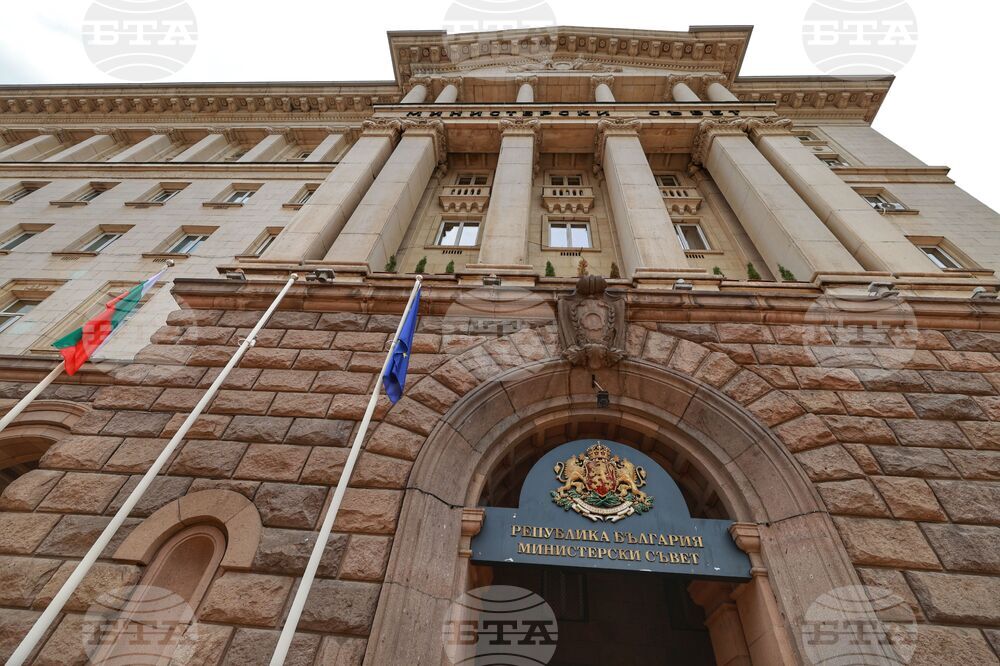
![Opposition Parties Criticize Radev Government's First 100 Days]() The Council of Ministers building, Sofia, May 8, 2026 (BTA Photo/Vladimir Shokov)
The Council of Ministers building, Sofia, May 8, 2026 (BTA Photo/Vladimir Shokov)
site.btaUPDATED Opposition Parties Criticize Radev Government's First 100 Days
August 16 marks 100 days since the government led by Prime Minister Rumen Radev took office. Parliament elected the new Council of Ministers on May 8.
Opposition political forces criticized the first 100 days of the Radev Cabinet. GERB said the Cabinet must now deliver results and accept full responsibility for its policies, Democratic Bulgaria (DB) described the first 100 days as a period of taking over a failed governance model and creating new risks, while Continue the Change (CC) accused the government of restoring the old political model through appointments in the administration, state agencies and state-owned companies. In a declaration in Parliament on the last plenary day before the summer recess, Vazrazhdane said that Radev had backtracked on statements he had made as president and prime minister, saying that his political reversals had now become decisions of his government.
GERB said in a Facebook post that Radev was no longer an alternative to those in power but was now in power himself and had no more excuses. The party said the government had a majority, a Cabinet, a budget and power, and therefore also had responsibility for its performance. According to GERB, the Cabinet's first 100 days had been a grace period, but it must now be judged by results.
The party said the government had started with a budget deficit of 5.7% of GDP and argued that, after submitting its own budget, the Cabinet could no longer blame the state of affairs it had inherited. GERB also criticized higher spending, the deficit and rising debt, saying these were political choices whose cost was borne by citizens and businesses. It described the government programme as falling short of the promised "State 2.0" and said replacing leadership in the administration and public-sector institutions did not amount to reform. GERB also questioned what had actually become cheaper for consumers, saying people lived with what they saw on their shopping receipts rather than with government press releases. On foreign policy, judicial reform, the administration, healthcare, education and digitalization, the party called for clear deadlines, legislation, ministerial accountability and results.
DB said the first 100 days had shown that the Radev government was not bringing about the promised change but was instead taking over and exploiting the allegedly failed governance model that had existed before it. The coalition acknowledged that 100 days were not enough to solve all of Bulgaria's problems, but said they were sufficient to assess the direction of government policy. It recalled that the Cabinet had come to power with high public trust and promises to bring prices under control, modernize the economy, dismantle the oligarchic model and restore the authority of the State.
According to DB, the government had instead produced "debt and taxes instead of reforms and modernization", personnel changes instead of dismantling the existing system, and a wish list instead of a bold and measurable programme. The coalition also criticized what it described as an empty chair and isolation instead of influence within the EU and protection of national security and national priorities. DB said the government had failed to deliver on its promises to control prices and dismantle the oligarchic model and was pursuing a policy that divided society. Voters, it said, had not voted for a new manager of the old system but for that system to be changed.
CC said the Cabinet's claim to have eliminated oligarchy from political power was contradicted by its personnel decisions, which the party described as bringing back the old political model. According to CC, people associated with previous political formations and governments had again taken positions in ministries, agencies and state-owned companies, only under a new political banner.
The party pointed to appointments and personnel changes across a number of sectors. In healthcare, it cited the return to senior positions of people who had previously been nominated by GERB; in energy, the appointment of a deputy minister with previous experience in companies under GERB governments; and in agriculture, the appointment of a former There Is Such a People (TISP) MP and ministerial nominee. In foreign affairs, CC cited the appointment of a former TISP ministerial and EU-level nominee. CC also pointed to changes in state-owned companies and public institutions, including appointments involving people with links to GERB, TISP and previous governments.
CC argued that these decisions contradicted Radev's claim of having eliminated the influence of the old political model and concluded that, after 100 days, "the same people, the same dependencies and the same office seekers" had returned to positions of influence.
On the last day before Parliament's summer recess, Vazrazhdane said Radev had contradicted statements he had made as president and prime minister, with what the party described as his political reversals now reflected in government decisions. The party said he had abandoned promises to increase incomes, protect Bulgarian families and reduce prices, public spending, the budget deficit and government debt.
Vazrazhdane pointed to higher costs for citizens and businesses, including a 30% increase in vignette fees and higher minimum social security thresholds for some professions, as well as a maximum contributory income of EUR 2,300. It also criticized the 5.7% budget deficit and the authorization for the government to assume up to EUR 10 billion in new debt. The party argued that Radev was now describing the deficit as inherited and realistic, whereas he had previously criticized deficits. On foreign policy, Vazrazhdane said Radev had abandoned his stated commitment not to provide financial support to Ukraine.
The Movement for Rights and Freedoms has not yet issued an official assessment of the new government's first 100 days.
On August 14, Radev said the government had "eliminated oligarchy" from political power and was consistently fulfilling its election promises through concrete steps. He also said the government had taken the risk of accepting a higher deficit this year in order to address people's problems.
/DD/
news.modal.header
news.modal.text