International Youth Day
![Interactive Map of Youth Policies in Bulgaria Presented in Pernik]()
![Interactive Map of Youth Policies in Bulgaria Presented in Pernik]() A presentation of a national initiative mapping youth opportunities and policies across Bulgaria (BTA Photo/Milen Milanov)
A presentation of a national initiative mapping youth opportunities and policies across Bulgaria (BTA Photo/Milen Milanov)
site.btaInteractive Map of Youth Policies in Bulgaria Presented in Pernik
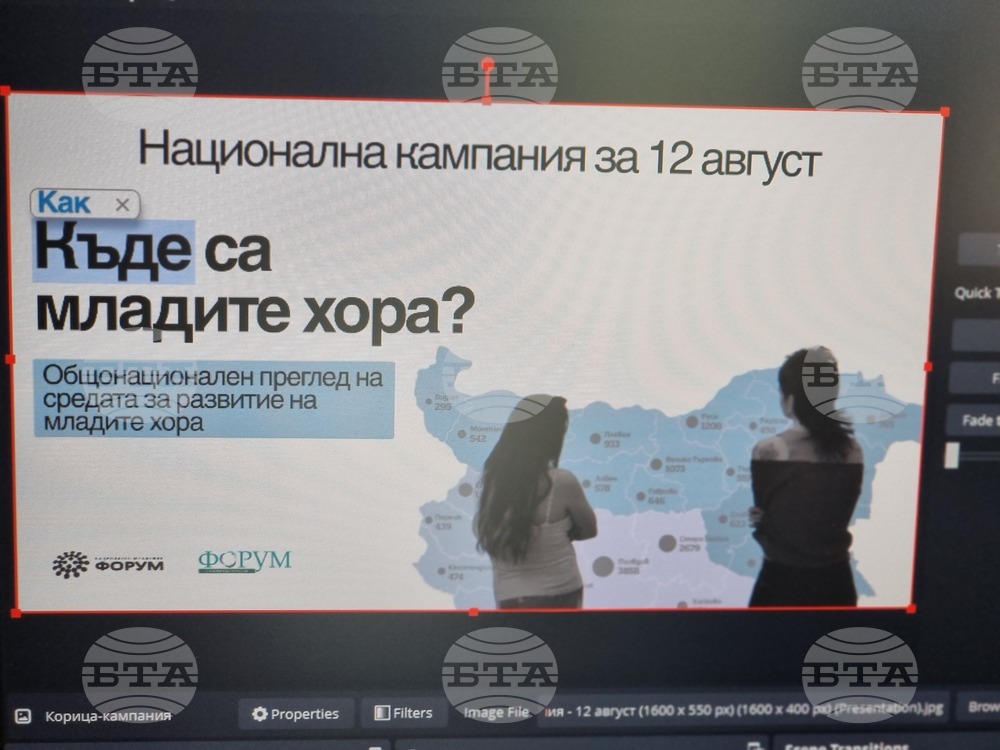
An interactive map of youth policies in Bulgaria has been presented in Pernik for the first time, bringing together data on opportunities and conditions for young people across all Bulgarian municipalities. The presentation was part of a national initiative of the National Youth Forum and the Citizen Participation Forum, implemented with the support of the National Network of Youth Centers.
Presented on the occasion of International Youth Day, the map aims to show where youth activities are being developed across the country, what opportunities are available to young people, and where gaps in support for the sector can be identified.
The platform brings together publicly available statistical and factual data on the state of the youth sector. It includes information on demographic trends among people aged 15 to 29, projects and organizations funded under national programmes, as well as data on youth centres, local policies, funding and infrastructure.
National Youth Forum President Atanas Radev told the Bulgarian News Agency (BTA) that the main goal is to identify which municipalities have an active environment for young people and where opportunities are insufficient. He explained that policies in this area play an important role in preventing risky behavior by creating spaces where young people can develop skills, socialize, take part in various initiatives and build a sense of community.
"The question is what we do for young people before the police, prosecution service and courts have to intervene," Radev said. According to him, youth organizations and centres are among the main tools for engaging with young people in their free time and helping them become part of communities and develop a sense of shared values.
He noted that youth policy is not a universal solution to all social problems, but can play a significant preventive role. In his view, more targeted investment and clear mechanisms for developing the sector are needed, rather than responding only after specific problems arise.
Radev also raised the issue of the sustainability of youth centres. He said that Bulgaria currently has 27 such centres — eight existing centres and another 19 established under the Recovery and Resilience Plan. Ensuring their long-term funding after project-based support ends, however, remains a challenge.
According to him, clearer legal and financial mechanisms are needed to ensure the sustainability of these structures, as well as better coordination between central and local government.
Citizen Participation Forum Director Miroslav Tsekov, whose organization is a partner in the national campaign, told BTA that the map will make it possible to track trends and differences between individual municipalities. "We want to show the opportunities young people have in their free time in different municipalities, but also the disparities, because the opportunities are not the same everywhere," he said.
The platform includes data from the National Statistical Institute on the development of Bulgaria’s young population over the past ten years, as well as information on funding for projects in the sector. It also presents data on organizations and initiatives supported under national youth programmes, Erasmus+ and the European Solidarity Corps.
Tsekov said that around EUR 16.5 million had been invested through the national youth programmes alone over the past five years, funding approximately 250 organizations and around 400 projects. The data should help not only track how the funds are distributed, but also assess the results achieved, he added.
The map also contains information on municipal-level policies and the state of youth centres, including their geographic coverage, staffing and funding. One of the goals is eventually to create a database of good practices showcasing successful initiatives and their impact on young people.
According to Tsekov, Pernik is among the country’s leading municipalities in terms of youth sector development. The city hosts a number of important events and discussions in this field, while its youth centre plays an active role in the national network.
The interactive map is organized by regions and municipalities and shows where activities have been carried out under national programmes, where active organizations are based and where resources are concentrated. According to the initiative’s organizers, the data can support informed decision-making and serve as a basis for recommendations to national and local institutions on improving conditions for young people.
Despite the expansion of the youth centre network and the investments made, youth policy still does not receive sufficient public and political attention, Tsekov said. He believes the centres are an important piece of infrastructure for reaching young people at the local level, particularly as parts of the youth organization sector are shrinking.
The map’s data will be publicly accessible, with the platform also designed to be integrated into the websites of partner organizations and institutions. The aim is to make the information visible and easily accessible in order to support decisions on developing the sector and improving opportunities for young people across the country.
The presentation of the initiative was held at the International Youth Center in Pernik and was livestreamed on the National Youth Forum’s social media pages.
/YV/
news.modal.header
news.modal.text