site.btaUPDATED Parliament Adopts Rules for Selecting SJC Members from Its Quota
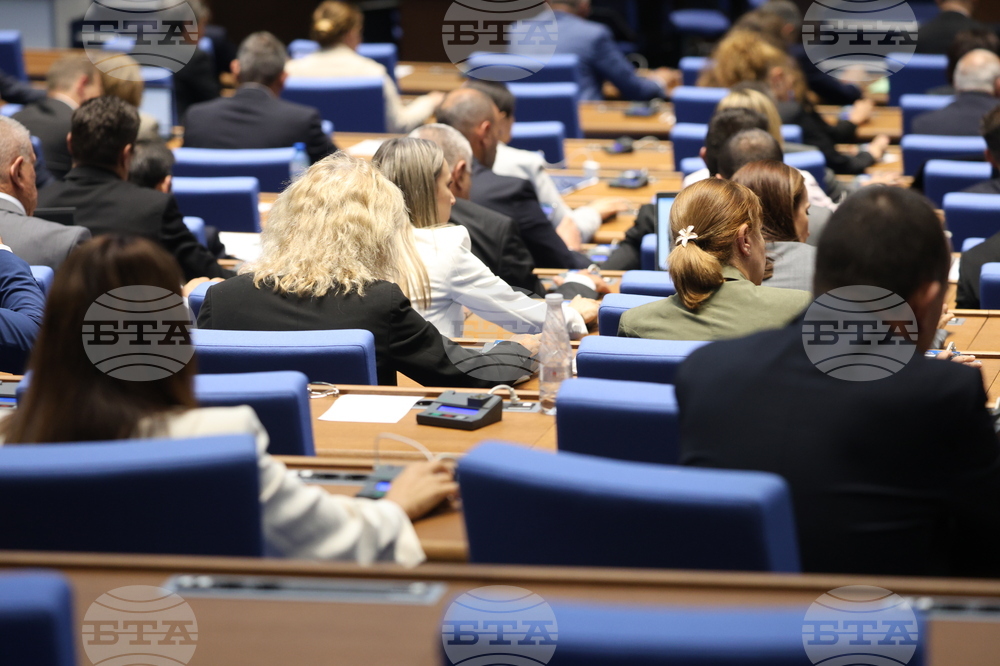
On Friday, Bulgarian lawmakers approved by 180 votes in favour, with no votes against and eight abstentions, the procedural rules governing the conditions and procedure for electing members of the Judges Chamber and Prosecutors Chamber of the Supreme Judicial Council (SJC) from the quota of the National Assembly. The decision was supported by MPs from Progressive Bulgaria, GERB-UDF, the Movement for Rights and Freedoms (MRF), Democratic Bulgaria and Continue the Change. MPs from Vazrazhdane abstained.
The rules establish the procedure for submitting nominations, proposing candidates, presenting and publicly disclosing candidate documents, reviewing their professional and ethical qualifications, as well as conducting hearings and carrying out the election.
Candidates for members of the SJC from the parliamentary quota will be nominated by MPs separately for each chamber - six members for the Judges Chamber and five members for the Prosecutors Chamber - in compliance with the requirements of the Constitution, the Judicial System Act and the adopted procedural rules.
The rules also allow for reasoned initiative nominations from professional organisations, civil society organisations and the academic community. An initiative nomination does not grant the proposed person the status of an official candidate in the election procedure unless their candidacy is subsequently submitted by an MP or a group of MPs in accordance with the Judicial System Act and the adopted rules.
Initiative nominations must be submitted to the Parliamentary Legal Affairs Committee within 21 days of the National Assembly's adoption of the rules. Within three working days after the deadline expires, the proposals will be published on Parliament's website. MPs will then have 14 days to submit official nominations for SJC members.
Each MP, or group of MPs, may submit their own candidate for a member of the SJC from the parliamentary quota, as well as nominate a person for whom an initiative nomination has already been submitted.
Within 14 days of the publication of the submitted candidacies, each candidate must present a written concept for their work as an SJC member, a declaration of assets and the origin of funds used to acquire the property, and a declaration concerning any private interest under the Anti-Corruption Act applicable to persons holding public office. The Parliamentary Legal Affairs Committee will subsequently hear the admitted candidates at an open session.
The National Assembly will elect each SJC member separately by a two-thirds majority of all MPs. If more candidates than the number of available seats receive the required majority, those receiving the highest number of votes will be considered elected. If not all members are elected, Parliament will launch a new procedure within two weeks for the remaining positions. The rules enter into force on the day of their adoption.
During the debate, Continue the Change MP Velislav Velichkov welcomed the fact that Parliament had reached the stage of adopting the rules, but criticized the delay in adopting amendments to the Judicial System Act and the election procedure. He noted that the rules give professional and civil society organisations, universities and the Bar Council an opportunity to submit reasoned nominations, but warned that the 21-day period would fall partly during August, when not only Parliament but also many of the institutions involved are on recess. According to his calculations, MPs would have to nominate candidates between August 24 and September 7-8.
Parliamentary Legal Affairs Committee Chair Yanka Tyankova (Progressive Bulgaria) rejected Velichkov's criticism, saying there had been no delay in adopting either the rules or the amendments to the Judicial System Act. She argued that had the rules been adopted earlier, the deadlines for the actual nominations would have started at the beginning of August, which would also have been problematic because of the summer recess.
Vazrazhdane MP Tsoncho Ganev said that replacing the SJC did not constitute judicial reform but merely replacing one group of people with another. He criticized the fact that the rules were being adopted on the last day of Parliament's session, noting that Vazrazhdane had submitted its own rules on the first day of the current Parliament.
Ganev also claimed that the SJC election was directly linked to the upcoming presidential election and alleged that the ruling forces had reached an agreement on the composition of the new council. He said this was the reason Vazrazhdane did not support the rules.
Democratic Bulgaria MP Atanas Slavov said the current Parliament had a constitutional majority for judicial reform. He said his group would support the rules, describing them as significantly better than previous procedures for electing SJC members. Slavov noted that informal consultations with opposition parties had also taken place during their preparation.
However, Slavov stressed that the procedural rules themselves could not guarantee the election of candidates with high professional and ethical qualifications. Such a guarantee would depend on the will of those making the nominations, the individuals they choose and the level of support those candidates receive, he said.
/KI/
news.modal.header
news.modal.text