site.btaPublic Trust in Radev Government Declining, Poll Shows
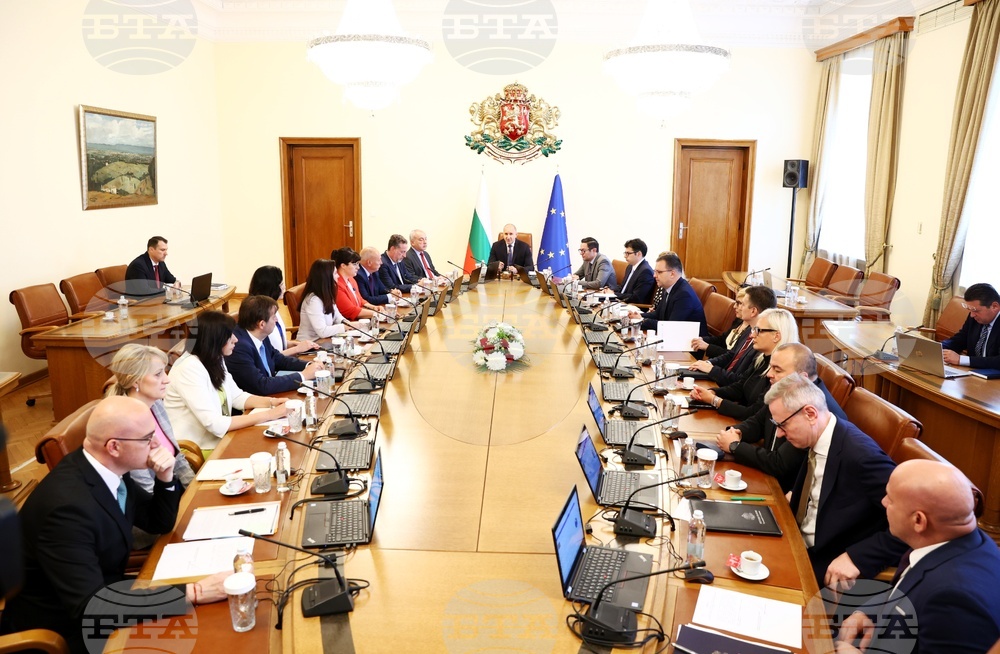
Public trust in the Cabinet in the second month of its work already shows a clearly pronounced downward trend, according to a survey by the Market Links polling agency presented on Thursday. The number of those who have trust has decreased by 8%, and the number of those who declare distrust in the Government has increased by 11% from last month's poll.
The survey was financed and implemented jointly by bTV and Market Links. It was conducted among 1,002 people over the age of 18 between July 11 and 19.
For the first time since the early elections in April, almost all key indicators measuring general attitudes show a simultaneous decline. The assessment of the direction of the country is again shifting in a negative direction, and trust in the Cabinet and the Prime Minister is decreasing for the second consecutive month, according to the main observations of the survey.
It is noted that the draft state budget, which is already on the verge of being approved by the National Assembly, remains one of the main weaknesses of the Cabinet during the first two months of its work.
Almost three months after its first session, the 52nd National Assembly enjoys a significantly higher level of trust compared to the previous one, which is most likely a result of the more moderate behaviour of the MPs.
The ranking of trust in party leaders remains without significant shifts, and only Rumen Radev retains a positive net rating – 50%. GERB leader Boyko Borissov has 12% trust, and Continue the Change Chair Assen Vassilev 13%. The new leader of Democrats for Strong Bulgaria (DSB), Radan Kanev, has 11% trust, as does Kostadin Kostadinov from Vazrazhdane. The co-chairs of Yes, Bulgaria Bozhidar Bozhanov and Ivaylo Mirchev have 8% and 9% support, respectively. The lowest level of trust is in the leader of the MRF, Delyan Peevski – 5%.
Among those ready to vote if early elections were held today, 39% would support Progressive Bulgaria, which thus remains the undisputed leader, followed by CC-DB with 14.4% of the votes and GERB-UDF. This means that that the decline in trust in the Cabinet has not yet been transferred to its electoral base, the pollsters note.
The comparison between the two months shows how the main positive message about the Government is losing weight. The thesis that the Cabinet is introducing order after chaos has fallen from 41% to 35% of respondents, while both the assessments of unpreparedness and those for continuing the old model with a new face are increasing. Positive attitudes overall are falling below 60%, which is a quantitative expression of the process observed in other indicators as well – the initial credit of trust is showing signs of exhaustion, the sociological survey indicates.
/NZ/
news.modal.header
news.modal.text