Council for Tourism Reforms
![Industry Experts Should Shape Tourism Reforms, Minister Says]()
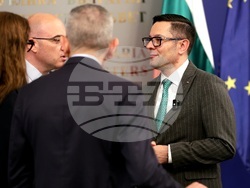
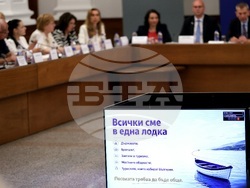
![Industry Experts Should Shape Tourism Reforms, Minister Says]() Tourism Minister Ilin Dimitrov (left) and Deputy Prime Minister Alexander Poulev during the Council for Tourism Reforms inaugural meeting, Sofia, June 30, 2026 (BTA Photo/Blagoy Kirilov)
Tourism Minister Ilin Dimitrov (left) and Deputy Prime Minister Alexander Poulev during the Council for Tourism Reforms inaugural meeting, Sofia, June 30, 2026 (BTA Photo/Blagoy Kirilov)
![Министерски съвет - Съвет за реформи в туризма - заседание]()
![Министерски съвет - Съвет за реформи в туризма - заседание]()
![Министерски съвет - Съвет за реформи в туризма - заседание]()
![Министерски съвет - Съвет за реформи в туризма - заседание]()
![Министерски съвет - Съвет за реформи в туризма - заседание]()
![Министерски съвет - Съвет за реформи в туризма - заседание]()
![Министерски съвет - Съвет за реформи в туризма - заседание]()
![Министерски съвет - Съвет за реформи в туризма - заседание]()
![Министерски съвет - Съвет за реформи в туризма - заседание]()
![Министерски съвет - Съвет за реформи в туризма - заседание]()
![Министерски съвет - Съвет за реформи в туризма - заседание]()
![Министерски съвет - Съвет за реформи в туризма - заседание]()
![Министерски съвет - Съвет за реформи в туризма - заседание]()
![Министерски съвет - Съвет за реформи в туризма - заседание]()
![Министерски съвет - Съвет за реформи в туризма - заседание]()
![Министерски съвет - Съвет за реформи в туризма - заседание]()
site.btaUPDATED Industry Experts Should Shape Tourism Reforms, Minister Says
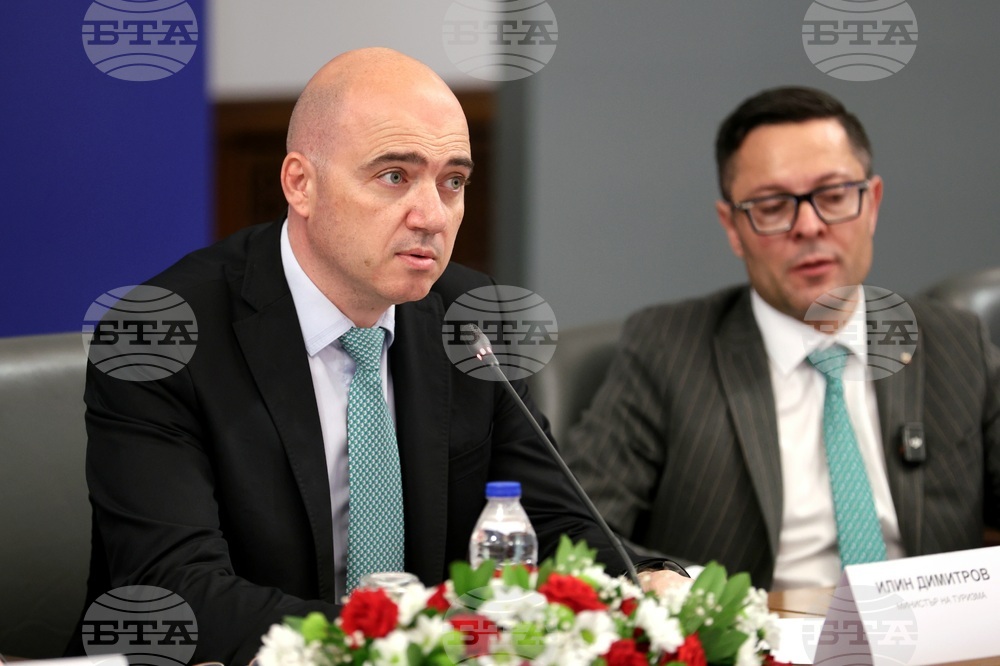
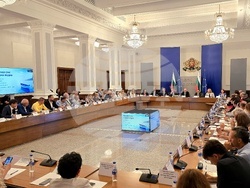
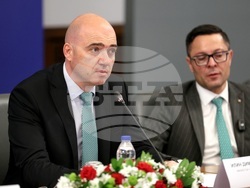
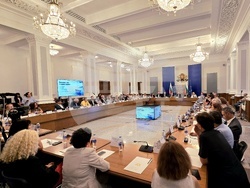
Bulgarian Tourism Minister Ilin Dimitrov said that reforms in the tourism sector would be carried out with the help of experts with practical experience and people working in the field. "I want the reforms to be implemented with you - the people who work in the sector every day and bear responsibility while on-site," Dimitrov said, speaking during the inaugural meeting of the Council for Tourism Reforms, held at the Council of Ministers on Tuesday.
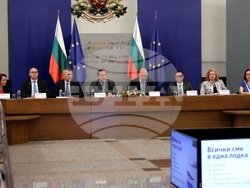
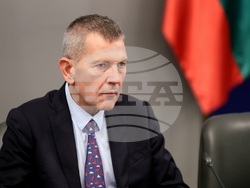
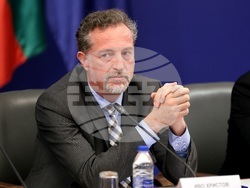
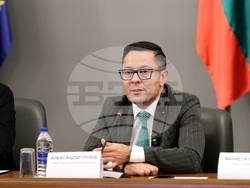
Deputy Prime Minister and Economy, Investments and Industry Minister Alexander Poulev, Deputy Prime Minister Ivo Hristov, and government officials and tourism industry executives also attended the meeting.
Dimitrov emphasized that the meeting was not merely a formality but a genuine forum for hearing the industry's voice. He noted that over 200 associations on the National Tourism Register had been invited, making the event unprecedented in scale up to date.
The minister added that the sector should not be viewed as a secondary issue. "Tourism encompasses the economy, regional development, transport, culture, education, the country's international image, and public revenues," he pointed out.
He assured business executives that his Ministry would not work against them, and that tourism would not be a "punching bag for vested interests".
Dimitrov outlined the baseline for building a more modern and competitive Bulgarian tourism industry. This includes improving the quality of tourism products, creating modern and effective publicity of Bulgaria abroad, addressing issues of connectivity, workforce, and training, updating legislation and strengthening oversight, tackling the informal sector in tourism, as well as focusing on regional development and transforming the country into an attractive year-round destination.
Dimitrov added that the Council will hold frequent meetings in small, flexible groups with direct access to decision-makers. Each meeting will begin with a review of the previous session - what was decided and what has not yet been implemented. He also added that the practice of privileged associations with "subscriptions" to the Tourism Ministry will be discontinued and everyone will be heard based on their effectiveness and concrete proposals.
He noted that the sector's actual contribution to GDP is between 7% and 8%, and when related sectors are included, the share rises to 15-16% of GDP. One in ten Bulgarians is directly employed in tourism, and one in five works in fields indirectly related to it, Dimitrov said.
He also quoted the latest data on tourism, and pointed out that growth has been uneven. The number of overnight stays has reached "pre-pandemic" levels, but the number of tourists still lags behind the record-breaking year of 2019, he said. Since the beginning of the year, there has been a 6.1% decline compared to the previous year. The foreign market has recorded a 9.3% decrease, while the domestic market has fallen by 4.1%. The sharpest declines are observed in the markets of Romania, Germany, and Israel. Dimitrov said that the Unified Tourist Information System will be made publicly available on a monthly basis so that everyone can track the actual data on markets and overnight stays.
Due to a decline in charter programmes, the average length of stay for tourists in Bulgaria - primarily Bulgarians, Romanians, and visitors from other nearby markets, is between 2.7 and 3.2 days, while in Croatia the average stay is 5 days, and in Mallorca, 6.5 days, the Dimitrov added. He pointed out that there are significant differences in service quality, limited product options for tourists with higher purchasing power, low productivity compared to competitors in the region, and a shortage of staff.
Dimitrov presented in detail a strategic framework for developing tourism as a year-round industry with high-end experiences, based on five pillars: connectivity and accessibility, workforce and quality, advertising and marketing, investments, and infrastructure and the environment.
/LG, RD/
Additional
news.modal.image.header
news.modal.image.text
news.modal.download.header
news.modal.download.text
news.modal.header
news.modal.text