site.btaFinance Ministry Releases Updated Medium-Term Budget Forecast for 2026-2028 Period
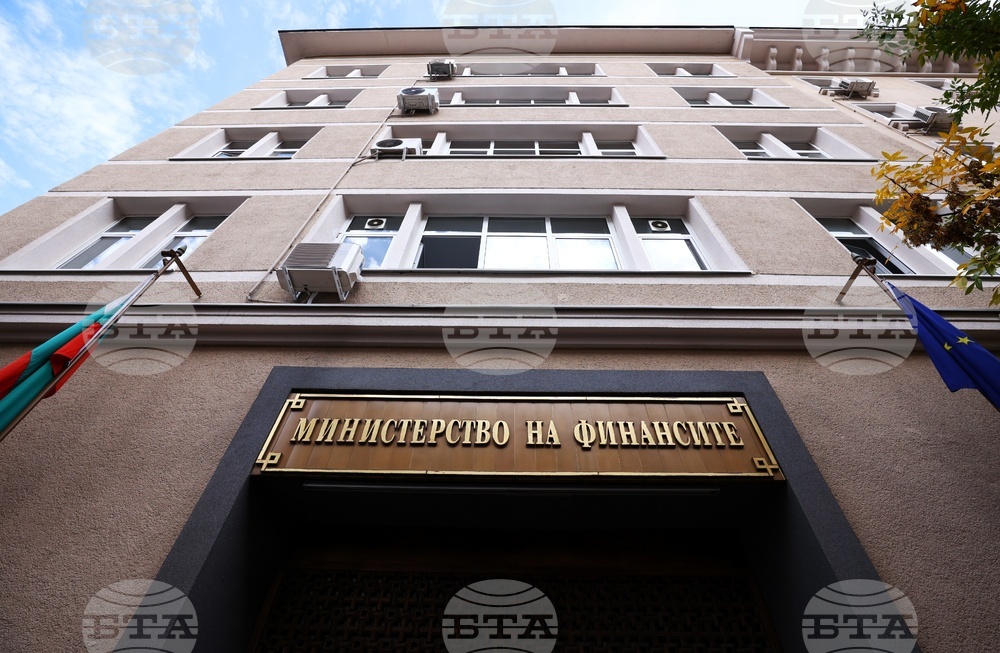
Bulgaria's Ministry of Finance on Wednesday published on its official website an updated medium-term budget forecast for the 2026-2028 period, which is presented as an explanatory report reasoning the 2026 State Budget Bill.
The three-year budget framework takes into account the European Commission's proposal for triggering an excessive budget deficit procedure and the need to stabilize public finance in the medium term, the Ministry said in a press release.
The revenues, grants and donations under the consolidated fiscal programme amount to EUR 49.615 billion in 2026 (39.2% of GDP), EUR 50.272 billion in 2027 (37.1%), and EUR 53.394 billion (37.6%) in 2028. For 2025, this budget item is inconclusively reported at 37.6% of GDP for 2025.
Budget expenditures are expected to stand at EUR 56.807 billion in 2026, EUR 55.350 billion in 2027, and EUR 57.687 billion in 2028.
The budget deficit target is thus 5.7% of GDP for 2026, 3.8% for 2027, and 3.0% for 2028.
The economy is projected to grow by 2.6% in 2026, 2.5% in 2027, and 2.5% in 2028. Average annual inflation, measured by the harmonized consumer price index, is expected to rise to 4.3% in 2026, while consumer prices are to increase by 5.2% at the end of the year, compared to 3.5% by December 2025, year on year. Average annual inflation is expected at 3.8% for 2027 and at 2.5% for 2028.
The maximum amount of the new public debt that can be incurred in 2026 is EUR 10.1 billion, including a EUR 3.261 billion loan for financial support under the EU SAFE (Security Action for Europe) Instrument for strengthening Europe's defence industry.
The public debt is projected to reach EUR 37.7 billion (30.1% of GDP) in 2026, EUR 44.7 billion (33.2%) in 2027, and EUR 50.5 billion (35.2%) in 2028. The minimum amount of the fiscal reserve is set at EUR 2.6 billion by the end of 2026.
Total capital expenditures equal EUR 9.360 billion in 2026, of which EUR 4.028 billion are domestically financed and EUR 5.331 billion are EU-financed (including under the National Recovery and Resilience Plan).
Taxes, Wages and Pensions
Tax policy for the 2026-2028 period targets mainly maintenance of economic growth, improvement of the business environment, combating tax abuses, and enhancing fiscal resilience in the long term.
The maximum monthly contributory income will be increased from EUR 2,111.64 now to EUR 2,300, effective August 1, 2026, which is expected to add EUR 90.8 million to budget revenues in 2026. The minimum contributory incomes for particular economic activities and occupations are to be increased above the minimum wage, and this measure is expected to boost budget revenues for 2026 by EUR 50.9 million.
A revenue injection of EUR 53.3 million is to come from a 30% hike of e-vignette road tolls, effective August 1, 2026.
Other measures with a favourable impact on budget revenues, envisaged in the draft, are improving the compliance rate of public social insurance revenues (EUR 100.0 million) a concession royalty from Sofia Airport (EUR 50.0 million), increasing the compliance rate of tax revenues (EUR 200.0 million), increasing revenues from gambling taxation (EUR 100.0 million), and increasing revenues from the Modernization Fund in connection with the new projects approved by the European Investment Bank (EUR 100.0 million).
As a short-term measure for fiscal consolidation, personnel costs for elective office holders will be frozen in 2026, resulting in a budget saving of EUR 560 million-plus.
The draft proposes a 10% decrease, effective September 1, 2026 (until the end of 2026 and for the full year in the 2027-2028), of wage costs on personnel employed under employment and civil-service relationships and the ensuing compulsory social and health insurance contribution payable by employers. This measure does not apply to municipal employees, the military, the Interior Ministry personnel, the personnel of the State Agency for National Security, the National Service for Protection, the State Intelligence Agency, the places for deprivation of liberty, and the emergency medical care centres, the blood transfusion centres, the medical institutions for inpatient psychiatric care, the centres for comprehensive services to disabled and chronically ill children, and the medical-treatment facilities with the Council of Ministers and the ministries of health, of defence, of interior, of justice, and of transport, information technologies and communications.
The BGN 60 COVID supplement will no longer apply to pensions granted after July 1, 2026. The state subsidy to religious denominations will be reduced from EUR 10.2 per adherent (according to the latest population census) to EUR 7.7, effective October 10, 2026. The state subsidy to political parties will be decreased from EUR 4.09 to EUR 3.0 per valid vote received at the latest parliamentary elections, effective April 30, 2026.
Current and capital subsidies for the Bulgarian State Railways, the National Railway Infrastructure Company, Bulgarian Posts, etc., are to be optimized. More effective mechanisms will be implemented for evaluation and control of granting entitlement to personal care assistance, social assistance, financial support for people with disabilities, etc.
Under the bill, a new minimum wage fixing machinery is to be introduced in 2027, and until its adoption the amount of the minimum monthly wage is to remain unchanged from 2026 at EUR 620.20.
Social-Security Contributions, Excise Duties, Gambling Taxes
An obligation for civil servants under the Civil Servants Act and employees under the Judicial System Act to pay a share of their social and health insurance contributions is proposed to be phased in, with the ratio of the shares of the employer and the employee increasing to 80%/20% as from August 1, 2026 and to 60%/40% as from 2027.
A similar mechanism is to be developed for the employees under the Ministry of Interior Act, the Defence and Armed Forces Act and other such, to take over their personal social and health insurance contributions at the rates applicable to the rest of the categories as from 2027.
As part of the staged increase of excise duty rates on tobacco products in the 2025-2029 period, the periods for reaching the target levels of excise duty rates will be decreased so as to achieve proportionality when the new excise duty framework is applied. The excise duty rates on tobacco and tobacco products are to be modified, effective August 1, 2026.
Execution will be levied on the cash at hand at distributive trade establishments so as to recover more effectively public receivables for delinquent taxes and social-security contributions and the interest accruing on them.
Licensing requirements are to be introduced under the Gambling Act for affiliate operators which promote licensed operators' games of chance in the territory of Bulgaria. A two-component stamp duty will be charged on the commission fee charged by affiliate operators based on pre-agreed effectiveness indicators.
Under the bill, payments from and to unlicensed gambling operators by banks and other payment institutions will be blocked so as to curb illegal gambling and block illegal betting sites by mobile operators, internet service providers, etc.
Earlier in the day, Deputy Prime Minister and Finance Minister Galab Donev presented the key parameters of the 2026 draft state budget.
/KK/
news.modal.header
news.modal.text