site.btaTransport Sector Assessment Shows Most Serious Problems at State Railways, Bulgarian Posts, Says Minister Peev
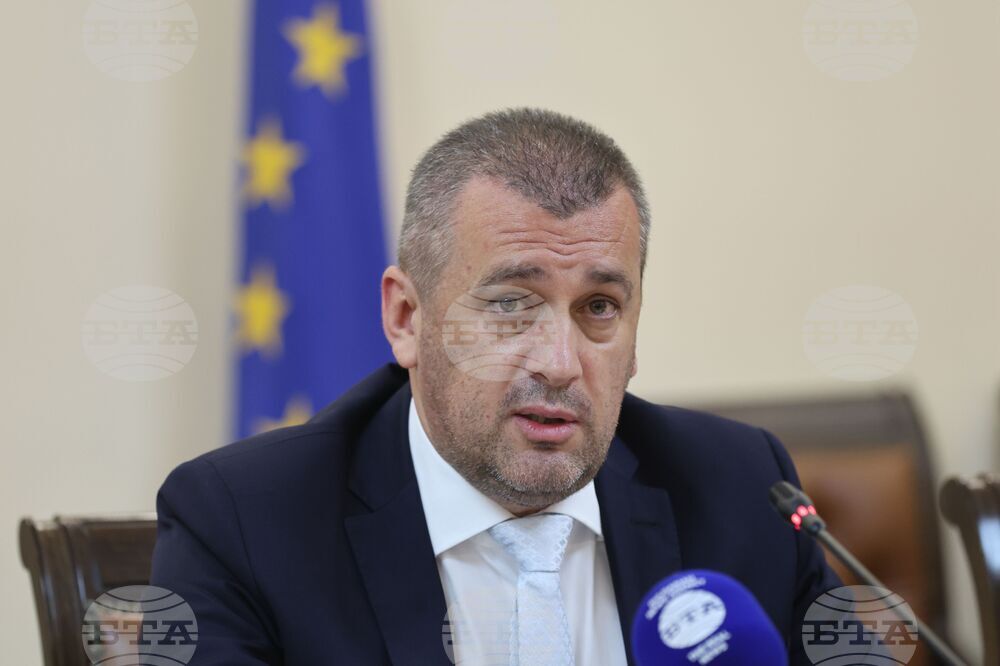
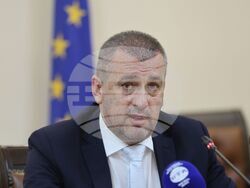
At a briefing here on Thursday, Minister of Transport and Communications Georgi Peev presented the actions taken by his team in the first 30 days since taking office. A preliminary assessment of the sector's state was conducted, which showed that out of the Ministry's many structures and enterprises, National State Railways (BDZ), the National Railway Infrastructure Company (NRIC), and Bulgarian Posts have the most serious problems.
Based on this assessment, Peev and his deputies have begun working on a clear programme with specific deadlines and priorities in the transport sector.
Specialized audits are underway at the NRIC, BDZ Passengers, BDZ Cargo, and Bulgarian Posts. Once these are completed within 45 days, specific programmes for improving the company's work will be elaborated, Peev explained.
Regarding the NRIC, the Minister said he was surprised both by the company's scale and the accumulated problems. In the last ten years, over EUR 1.7 billion have been invested in railway infrastructure under EU projects. At the same time, the company administers contracts worth nearly EUR 2 billion, and part of the projects that started back in 2015-2017 are yet to be completed.
The Minister noted that commitments of about EUR 765 million have been made under EU projects without secured funding. He cited examples of contracts related to railway infrastructure safety - including the supply of ballast for the tracks - that have been delayed for years. "It is absolutely unacceptable to us that a contract related to safety cannot be concluded for three years," Peev said.
According to him, there have also been cases where infrastructure projects were launched without completed land acquisition procedures, without the necessary archaeological and geological surveys, and without project readiness. This leads to years of delays, subsequent cost overruns, and the need for additional funds to fulfill the contracts, Peev explained.
He also reported that advance payments exceeding EUR 30 million have been made for projects on which no actual construction work has been carried out to date.
Peev stated that more than half of the country’s railway network operates with temporary or permanent speed restrictions below design parameters.
According to him, index adjustments under construction contracts also create problems, as they are paid out in a non-transparent manner and without sufficient funds for all contractors.
The Minister also commented on the state of BDZ. He announced that an in-depth analysis will be conducted on the necessity of the holding company structure within the organization. "I have not heard a single substantial argument justifying the existence of BDZ Holding," Peev said.
According to him, the liabilities of BDZ Passengers amount to nearly EUR 30 million and pose a risk to the provision of public rail transport services.
The Minister also drew attention to the poor condition of the rolling stock. He noted that over 300 railcars still in use on the railway network were manufactured decades ago. Peev warned of a serious risk related to the maintenance of the Siemens electric trains, which account for a significant portion of passenger transport in the country.
He announced that the Ministry and BDZ management have taken urgent measures to secure spare parts and technical support so that serious disruptions to passenger service do not occur during the summer season. Contracts have already been signed for the repair and preventive maintenance of the air-conditioning systems in some of the railcars, following problems that have arisen in recent years during periods of high temperatures.
The Minister also addressed the issue of the new trains from manufacturers Skoda and Alstom. He explained that following their delivery, procedures for licensing, certification, registration, and staff training will be required, which is why they will not immediately begin operating on the rail network.
Regarding BDZ Cargo, Peev said that the company has liabilities exceeding EUR 60 million, with about 80% of them overdue. According to him, the company is operating in an unfair competitive environment, as it must simultaneously meet all the requirements imposed on State-owned companies and compete with private operators.
Peev also warned of a serious risk of losing EU funding. Under Operational Programme Transport Connectivity, approximately 80% of the funds had been contracted as of May, but actual implementation stood at about 27%.
The situation regarding the project to modernize the Sofia-Plovdiv railway line is particularly critical. According to preliminary data, the most serious problem is on the Elin Pelin-Kostenets section, where additional funding of over EUR 205 million is needed.
"We will have to restructure the project and its financing so that we do not lose the EU funds," the Transport Minister said.
/RY/
Additional

news.modal.image.header
news.modal.image.text
news.modal.download.header
news.modal.download.text
news.modal.header
news.modal.text