site.btaBulgarian Construction Chamber Can Complete Key Infrastructure Projects - Expert

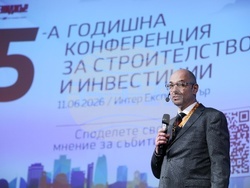
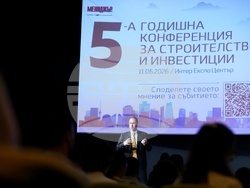
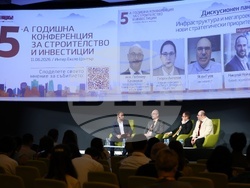
The Bulgarian Construction Chamber (BCC) has the necessary capacity, motivation, and capabilities to carry out key infrastructure projects, stated Lyubomir Kachamakov, Chair of the Management Board of the Bulgarian Construction Chamber (BCC), during the fifth annual conference on construction and investment organized by Manager magazine here on Thursday. Kachamakov said that the most important factor for the successful implementation of projects is securing financing, as he referred to the investment programme for infrastructure development along the North-South axis.
The expert said that state resources and expected funds from Europe will not be sufficient for large-scale projects, and for this reason, he believes the State must find a way to attract private capital into the financing formula. He focused on the workforce in the construction sector, noting that it is shrinking, with a large portion of workers having left for Western Europe. Kachamakov emphasized that the only way to bring them back is through financial incentives, by raising living standards in Bulgaria, so that people see a reason to return.
Kachamakov emphasized the need for regulatory changes. He referred to the Public Procurement Act and the introduction of International Federation of Consulting Engineers contracts in a simplified form, tailored to the capacity of the administration. He said that such contracts would ensure balance and distribute responsibility among all participants in the construction process. It is also necessary to accelerate the digitization of the construction process.
The expert concluded that it is important for the industry that the State does not delay anticipated projects and ensures timely design and coordination of documents.
Georgi Angelov, senior economist at the Open Society Institute – Sofia, said that against the general backdrop in Europe, Bulgaria shows relatively good levels and forecasts for macroeconomic growth. He emphasized, however, that the structure of Bulgaria's economic growth is unsustainable. Growth is driven by final consumption, which stimulates large imports rather than developing local production. The economist noted that while consumption is growing, Bulgarian exports and the industrial sector are in a prolonged decline, which is due both to global geopolitical factors and tariffs and to stagnation in Germany, which is losing market share to China.
The economist said that household loans are growing and emphasized that, unlike the previous year, when mortgage loans dominated, the main driver now is consumer credit, which goes directly into the market, drives up inflation, and triggers political problems.
Angelov commented on the budget deficit, noting that the problem is that government spending is directed primarily toward current needs rather than toward investment and infrastructure. Regarding the accumulation of new debt, he warned that the country cannot sustain this pace for more than 2–3 years without the risk of a "Romanian scenario".
The economist said that Bulgaria is seeing some growth in investment, but that growth is driven by the expiring deadlines under the Recovery and Resilience Plan. Angelov recommended that any decision regarding future investments in the country be prioritized based on its expected economic impact. The government faces the difficult task of cooling consumer lending, limiting current expenditures, balancing the deficit, and redirecting resources toward real investments and production, Angelov added.
Economist Yassen Guev reported that the main reason public-private partnerships (PPPs), which are a successful practice worldwide, do not take place in Bulgaria is corruption. He said that the State has so far avoided moving toward PPPs because, under such a model, control over processes and finances shifts to a private entity, which hinders corrupt practices involving the misappropriation of funds.
Guev cited the project for new units at the Kozloduy NPP as the largest PPP and the largest construction project in Bulgaria at present, one that is, however, plagued by systemic problems, including a lack of transparency and cost overruns.
/MR/
Additional









news.modal.image.header
news.modal.image.text
news.modal.download.header
news.modal.download.text
news.modal.header
news.modal.text