site.btaUPDATED European Commission Recommends Excessive Deficit Procedure for Bulgaria
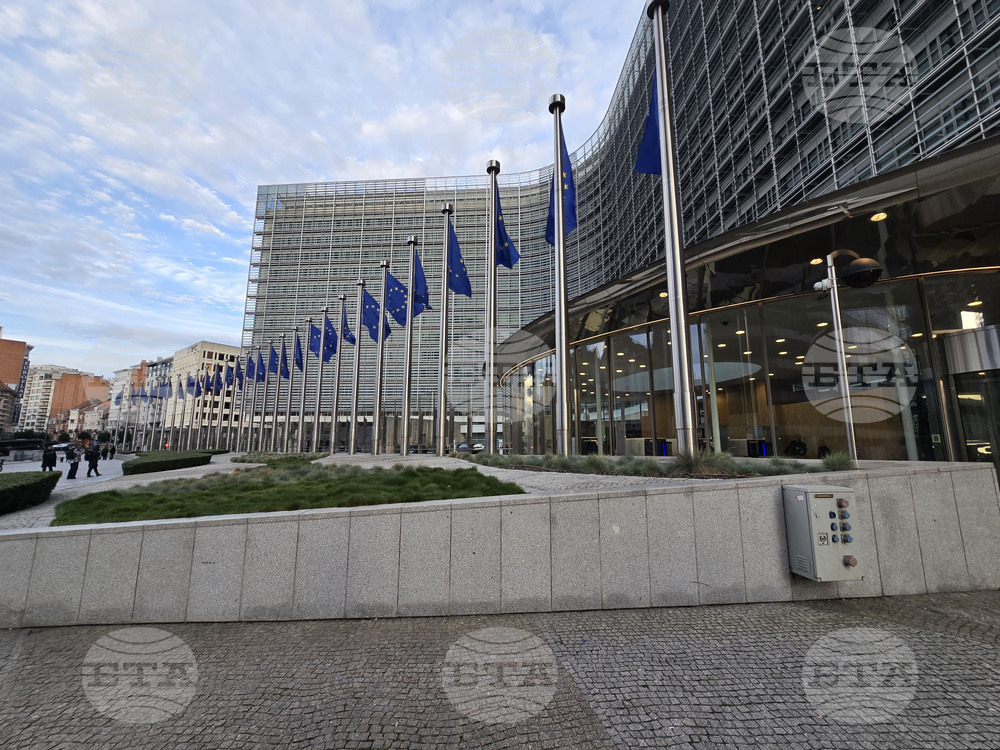
The European Commission has recommended the opening of an excessive deficit procedure (EDP) for Bulgaria after concluding that the country does not comply with the European Union's deficit criterion under the bloc's fiscal rules.
The recommendation was announced on Wednesday as part of the Commission's 2026 European Semester Spring Package. Following an assessment under Article 126(3) of the Treaty on the Functioning of the European Union, the Commission determined that launching an EDP for Bulgaria is warranted at this stage.
The recommendation will now be considered by the Council of the European Union, which will decide whether to formally open the procedure. If approved, Bulgaria will be required to take measures aimed at bringing its public finances back into line with EU fiscal requirements.
Speaking at a news conference, Valdis Dombrovskis, the EU Commissioner for Economy and Productivity, pointed out that Bulgaria's budget deficit last year was not exceeding 3% of GDP when taking into account additional defence spending under the national escape clause but this year, the excess over 3% of GDP is no longer explained by additional defence spending, which is why the report concludes that the deficit criterion is not complied with. "The Commission will continue to closely monitor fiscal developments in the coming months. We will return to our assessment of compliance for all Member States in the European Semester Autumn Package," he said.
What the Commission says of Bulgaria
In its 142-page country report on Bulgaria, the European Commission notes that the country's general government deficit reached 3.5% of GDP in 2025 and is expected to increase further, remaining above 4% through 2027, partly due to planned defence spending. After years of fiscal discipline, Bulgaria has been running budget deficits since 2020, while public debt has been rising at a faster pace, the report says.
According to the Commission, substantial and persistent increases in public expenditure without corresponding structural financing measures have contributed to the continued deficits despite positive economic growth. Bulgaria may face difficulties in meeting the commitments set out in its medium-term fiscal-structural plan unless further fiscal consolidation efforts are undertaken. The country has committed to achieving a structural primary deficit of 1.8% of GDP by 2028, implying an annual adjustment of 0.16 percentage points.
To safeguard the sustainability of public finances, the Commission says there is scope to improve the tax system, combat the shadow economy and enhance the overall fairness of taxation.
The report notes that Bulgaria's consolidated budget deficit rose to 3.5% of GDP in 2025 from 3.0% in 2024. Based on the Commission's Spring 2026 forecast, the deficit is expected to increase further to 4.1% of GDP in 2026 and 4.3% in 2027.
In recent years, Bulgaria has taken steps to improve the adequacy of pensions and social benefits and has increased wages, often through automatic indexation mechanisms and rises in the minimum wage. As a result, expenditure is projected to continue growing through 2027, partly due to military equipment deliveries. Defence spending is increasing, and expenditure pressures are expected to intensify further. The Commission also warns that population ageing will have significant implications for pension systems, healthcare and long-term care in the years ahead.
Five recommendations
The Commission further recommends that Bulgaria take action in 2026 and 2027 in five fields.
First, it urges Bulgaria to adhere to the spending limits set under the EU fiscal framework in 2026 and 2027 in order to correct its excessive deficit, while making use of available flexibility for higher defence spending. It also calls on the country to strengthen tax collection, combat the shadow economy and improve the fairness of the tax system.
Second, the Commission urges Bulgaria to ensure the continuity of reforms and investments under the Recovery and Resilience Facility and to accelerate the implementation of cohesion policy programmes.
Third, the Commission recommends improving the efficiency and digitalization of public administration, strengthening anti-corruption measures, particularly in high-level cases, enhancing the independence and effectiveness of the judiciary and regulators, improving public procurement procedures, and increasing the impact of public investment in research and development.
Fourth, the Commission calls for further decarbonization of the electricity sector through greater deployment of onshore and offshore wind power, modernization of electricity grids and district heating systems, improved governance of state-owned energy companies, measures to tackle energy poverty, and support for industrial decarbonization. It also recommends accelerating investments in clean urban, public and rail transport, particularly to improve connectivity in northern Bulgaria, and strengthening climate resilience, water management and waste management.
Fifth, the Commission urges Bulgaria to strengthen competence-based learning, improve teacher training and the quality, inclusiveness and labour market relevance of education and training. It also calls for measures to increase employment among underrepresented groups, expand adult learning opportunities, improve access to integrated social and employment services and community-based long-term care, and make minimum income support more effective. In healthcare, the recommendations include shifting resources from hospital-based to outpatient care, reducing out-of-pocket payments and addressing shortages and regional disparities in the distribution of healthcare professionals.
Reactions
The Government
Deputy Prime Minister and Finance Minister Galab Donev presented a package of measures to tackle the excessive deficit. At a press conference on Wednesday, he said that reducing the deficit from 7.4% to 3% is possible and depends on the measures that will be proposed in the State Budget Act and implemented by the Government.
“If the public is willing to bear the measures, the first step should be a freeze on incomes, as well as the removal of all mechanisms that link wages to the national average gross salary and the minimum wage,” Donev said. He expressed the view that structural reform and consolidation of the State administration are needed, along with restrictions on public spending regardless of its source.
He said that the measures the Government will take concern both the expenditure and revenue sides of the budget. “Taxes and social security contributions will not be increased,” Donev assured. He said that current tax rates would remain unchanged, but there is potential for additional revenue from the shadow economy.
“There will be changes and measures aimed at increasing revenue for the Treasury. The excise duty timetable for tobacco products will be brought forward, and there will be measures targeting other sources of revenue to support expenditure-side measures, so that increased revenues can ease spending pressures. No new taxes will be introduced,” he said.
He said that the current deficit of 7.4% amounts to more than EUR 8.5 billion, or almost EUR 9 billion. However, there are a further EUR 2.2 billion in unpaid liabilities that have been “hidden away in drawers”, pushing the deficit even higher. These EUR 2.2 billion include projects of the Road Infrastructure Agency and municipalities, Donev said.
He announced that at the Government meeting on Wednesday a decision had been taken to set a state debt ceiling of EUR 3.8 billion.
The Opposition
GERB-UDF MP and former Finance Minister Temenuzhka Petkova told reporters in the parliamentary lobby that she does not know how the deficit reached 7.4%. She was adamant that no data had been manipulated. She added that the actions that her Ministry undertook were entirely within the framework of the law and in the interest of the public. Commenting on Donev's statement that there are EUR 2.2 billion in unpaid liabilities that have been "hidden away in drawers", Petkova said that within the government, which was formed with GERB's mandate, no such liabilities exist.
The budget deficit is a real problem but it can be solved, Democratic Bulgaria MP Martin Dimitrov told journalists in the parliamentary lobby. "The Government should stop panicking," Dimitrov said. He added that Democratic Bulgaria has been insisting on and proposing concrete measures. "This is what the protests were about. Today we will again submit additional concrete measures to optimize and reduce spending," the MP said.
Responding to Finance Minister Donev, Continue the Change party leader Assen Vassilev noted that in 2023, when Donev was prime minister, the deficit had been announced at 6.8%. Parliament then adopted a budget with a 3% deficit, and "we finished the year at 2%". "To tell me that you cannot balance the budget at a 3% deficit means either that you do not want to or that you cannot. If you do not want to, that is clear; if you cannot, then leave and let someone else do the job," he said.
The budget situation "is far from being that bad," MP Dimo Drenchev from Vazrazhdane told journalists in the parliamentary lobby. "It won't happen this way, bold reforms are needed," he added. Drenchev also said that the Progressive Bulgaria coalition won the elections with the slogan "we are ready, we can", but there is nothing to suggest that they are either ready or able to do anything.
/NF/
news.modal.header
news.modal.text