BTA interview
![OECD's Andreas Schleicher Recommends Closer Link Between Education and Real-World Needs in Bulgaria]()
![OECD's Andreas Schleicher Recommends Closer Link Between Education and Real-World Needs in Bulgaria]() Andreas Schleicher, Director for Education and Skills at the Organization for Economic Co-operation and Development (OECD) speaking in an interview for BTA, Sofia, May 27, 2026 (BTA Photo/Milena Stoykova)
Andreas Schleicher, Director for Education and Skills at the Organization for Economic Co-operation and Development (OECD) speaking in an interview for BTA, Sofia, May 27, 2026 (BTA Photo/Milena Stoykova)
site.btaOECD's Andreas Schleicher Recommends Closer Link Between Education and Real-World Needs in Bulgaria
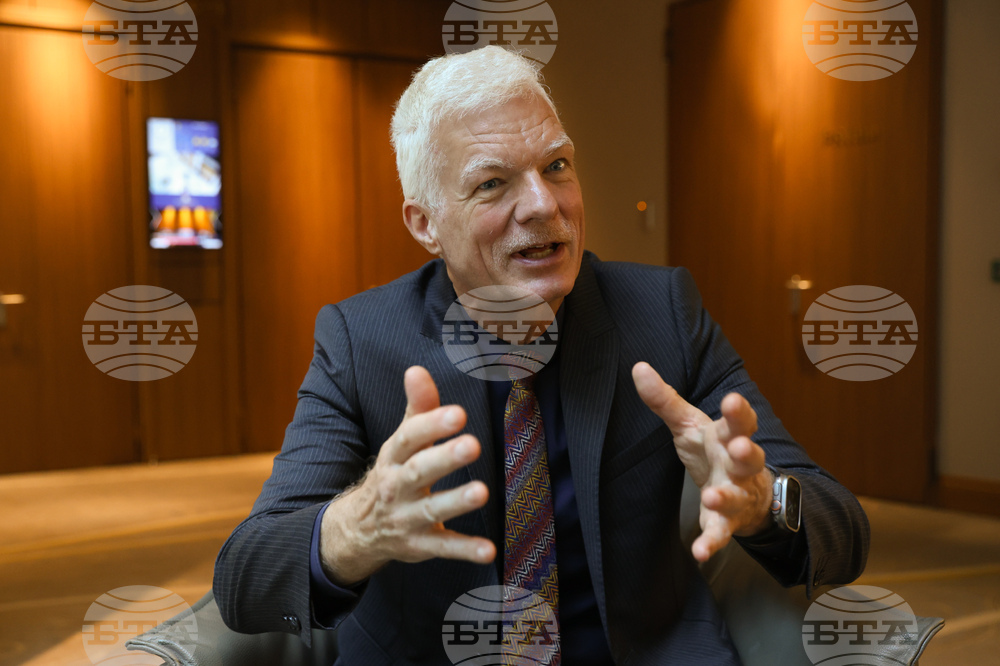
The learning process in Bulgaria should be more engaging and more closely connected to the real world, as many young people in the country either do not know what they want to do in the future or have career aspirations that do not match the actual needs of the economy, Andreas Schleicher, Director for Education and Skills at the Organisation for Economic Co-operation and Development (OECD) and creator of the Programme for International Student Assessment (PISA), told BTA in an interview.
Asked what could be changed in the Bulgarian education system so that it better meets the needs of the labour market and the economy, Schleicher said the first step should be to create a more interesting and engaging educational environment for young people in Bulgaria. According to him, many young people currently feel that "school is a waste of time".
"The learning experience needs to be more relevant, more interesting and better connected to the real world. At the moment, what students experience in school is quite disconnected from their future. Many Bulgarian young people do not know what they want to do in their future, or their future dreams are not aligned with reality," he said.
Schleicher cited survey data showing that the share of Bulgarian students who want to work as office workers is three times higher than actual labour market demand.
"Young people do not aspire to the future that is really there, and I think we need to do a better job to make learning more relevant, more engaging, and to help young people develop the knowledge, skills and attitudes that matter for success," he said.
Commenting on Bulgaria's path towards OECD membership, he said the organization enables the world's most advanced economies to learn from one another, while Bulgaria itself has much to contribute.
According to Schleicher, artificial intelligence is more likely to transform jobs around the world than replace them outright, with the key question being how to augment human capabilities in this new environment.
From an educational perspective, he said AI offers many opportunities to education systems worldwide by enabling more personalised and detailed learning. Schleicher gave the example that AI can be of great support to students with special needs.
At the same time, however, the use of AI in education also carries risks.
By delegating tasks to artificial intelligence, people risk degrading their human capabilities to the point where they begin to think like AI, he warned. In his view, children first need to learn how to think before they learn how to prompt AI systems. If people become dependent on AI-based search engines, they stop developing natural forms of human inquiry and questioning, the expert said.
"AI should become a scaffold that allows you to do great things, but not a crutch that makes you dependent on it, so that you can no longer walk on your own," he said.
Asked whether artificial intelligence could reduce people's motivation to acquire new knowledge, Schleicher replied that this was indeed a real risk.
"As humans, we were always better at inventing new things than using them wisely. Our brain is designed to save energy, which is why we often trade autonomy for convenience in life. I think there is a great risk that we lose human abilities for the sake of convenience," he warned, adding that this is a real danger that requires counteraction.
According to him, people build their mental capabilities through effort, while AI creates the risk that individuals may believe they no longer need to engage their brains because they can simply consume content created by ChatGPT, for example.
Andreas Schleicher was in Sofia this week, where he was awarded the honorary title of Doctor Honoris Causa of Sofia University St. Kliment Ohridski at an official ceremony at the university rectorate. He also held a meeting with Education and Science Minister Georgi Valchev and on Wednesday participated in an event in Sofia organised by the Bulgarian Employers Association Innovative Technologies (BRAIT), dedicated to the relationship between education, skills and economic competitiveness in the era of artificial intelligence.
/RY/
news.modal.header
news.modal.text