site.btaJustice Minister Insists that Countering Corruption Must Be Unconditional National Priority
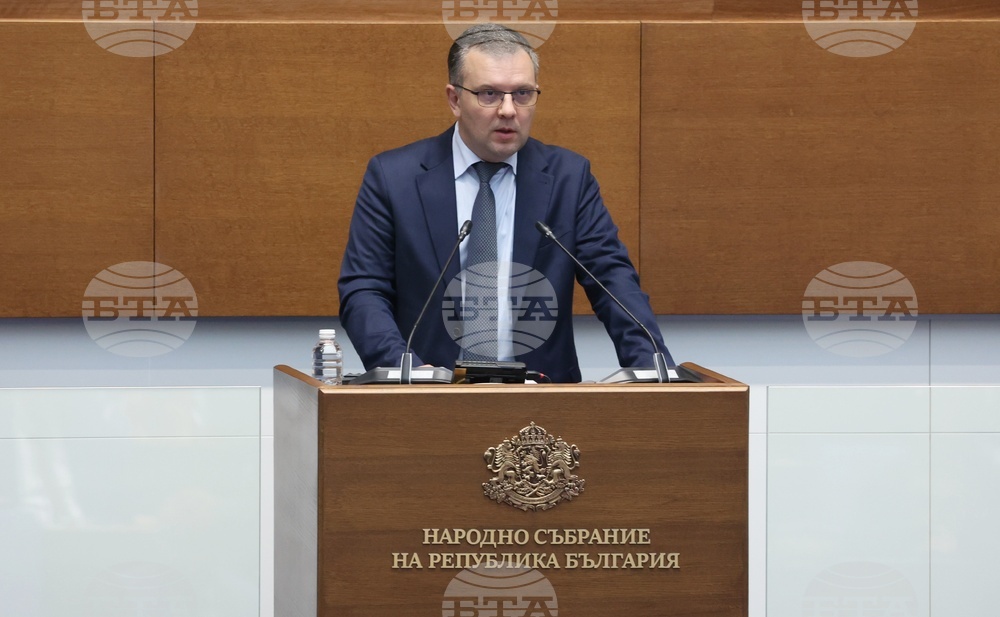
On Friday, as the National Assembly opened a first-reading debate on a government-sponsored bill to counter corruption among public-office holders, Justice Minister Nikolay Naydenov said from the parliamentary rostrum that the fight against corruption "must be an unconditional national priority, because only by affirming the rule of law, transparency and fairness can public trust in the institutions be restored and citizens' faith in democratic order and the rule-of-law state strengthened".
The minister recalled that at the end of 2023 an independent commission for countering corruption was created, and at the beginning of 2026 it was closed and its functions were divided among the National Investigative Service, the Interior Ministry and the National Audit Office. The two reforms that took place do not fulfil the commitments undertaken in the national Recovery and Resilience Plan, Naydenov stressed. He explained that the main purpose of the current bill is to establish an effective body for combating corruption.
This, he said, is necessary both in view of public need and in view of the implementation of the Recovery and Resilience Plan. The plan's main requirement is the creation of a politically independent body, elected through transparent and public procedures. It is precisely this requirement that is met by the current draft, the justice minister underlined.
It is envisaged that the commission will comprise five members, and the procedures for electing them are for the first time regulated in detail at statutory level, Nikolay Naydenov noted. Public procedures are established for the election of members with broad participation by non-governmental organizations, higher education institutions and research organizations. A similar public mechanism is envisaged for the appointment of the member of the commission by the president of the republic, he explained.
Judicial review of all appointment decisions is envisaged, the minister added. In addition, the term of office is five years, with no possibility of renewal. The next requirement of the plan is that the commission should have powers that directly concern the prevention of and counteraction to corruption activity and offences.
The main consequences of these offences are the harm to public interests, above all the destruction of trust in state institutions, Naydenov emphasized. This, he said, means that the new commission must concentrate analytical, operational and investigative capacity. The bill also proposes a number of amendments to other laws with a view to establishing the commission itself as a collective body, the justice minister added.
/VE/
news.modal.header
news.modal.text