site.btaUPDATED Draft National Assembly Rules of Organization and Procedure Clear Committee Stage
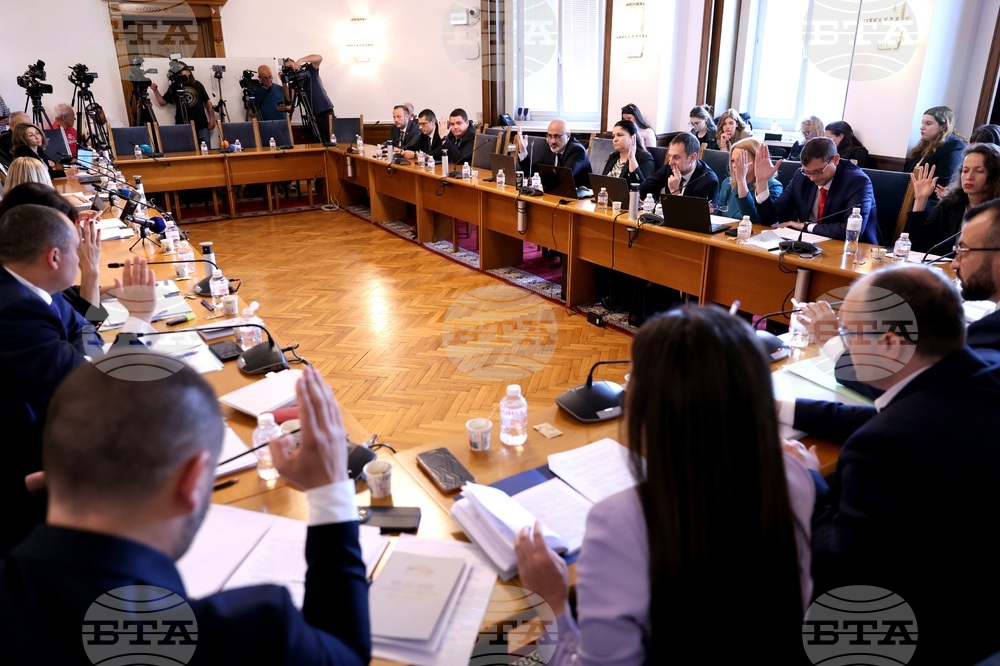
The competent parliamentary Ad Hoc Committee on Thursday finalized the draft Rules of Organization and Procedure of Bulgaria's 52nd National Assembly, and they will go before the full house next week, Committee Chair Dimitar Zdravkov MP of Progressive Bulgaria told journalists.
"The revisions are not revolutionary, we did not undertake to write entirely new rules but worked from the previous ones because we are convinced that they are the product of the work of many parliaments and a lot of provisions have been retained," the lawmaker said. He noted that his parliamentary group had entered 34 motions and had conceded on some of them. "Concessions have been made to the opposition in a sensible dialogue and after their motions were adequately reasoned," Zdravkov stressed.
Under provisions approved by the Ad Hoc Committee on Thursday, on second reading the National Assembly will debate and vote on bills chapter by chapter, section by section or text by text. Provisions for which no motions or objections in writing have been entered will not be read out in the debating chamber.
The debate will cover texts adopted at first reading, motions entered by MPs after the first reading, and motions included in the report of the committee in charge. Editorial and technical corrections will also be admissible.
Another draft provision approved by the Committee reduces the time allowed to MPs to reason motions from five minutes to three minutes per motion.
The Ad Hoc Committee proposed a reduction of the time limit for a rejoined from three to two minutes.
Only editorial or technical modifications will be admissible for provisions whose content is set in previously adopted provisions in the same bill, with speaking time limited to one minute.
Bills and committee reports must be made available to MPs no later than 24 hours before a plenary sitting, instead of the current 72-hour deadline. Standing committees will also be able to examine draft legislation no earlier than 48 hours after its allocation, down from 72 hours before.
Opposition Slams Tighter Deadlines
Rositsa Kirova MP of GERB-UDF argued that shortening the deadlines would not improve the quality of the law-making process and stressed that good faith, respect for procedures and clear rules mattered more.
Alexander Ivanov MP of GERB-UDF warned that the tighter deadlines could also pose difficulties to members of the ruling majority arguing for government-proposed legislation.
Nadejda Iordanova MP of Democratic Bulgaria said that introducing overly short deadlines would not help and cautioned that rushed legislation could be more damaging than delays.
Stoyu Stoev MP of Continue the Change described the reductions as unnecessary and said the legislative process should not be rushed.
The Committee further resolved that standing committees must consider together all bills regulating the same subject matter that have been tabled before the opening of the debate in the lead committee, with a single report to be prepared for all related bills.
The Committee enabled the prime minister, a deputy prime minister or a government minister to postpone an oral response to an MP's question due to illness, a mission abroad or in urgent cases on an indefinite number of occasions, unlike before, when this was possible only twice.
An MP will be unable to address a question or an interpellation that has already been answered or any questions identical to ones already asked.
The prime minister, a deputy prime minister or a government minister, who has failed to respond to a question or interpellation within the statutory time limit, will no longer be obliged to appear in person before the National Assembly within ten days and explain why they have not fulfilled their obligation.
After a debate, the ruling majority abandoned their motion to scrap an obligation of central and local government authorities and their administrations to provide MPs on request with information and documents related to the exercise of their powers.
/DD/
news.modal.header
news.modal.text