site.btaUPDATED Government "Not at War with Retail Chains" but with Unfair Trading Practices
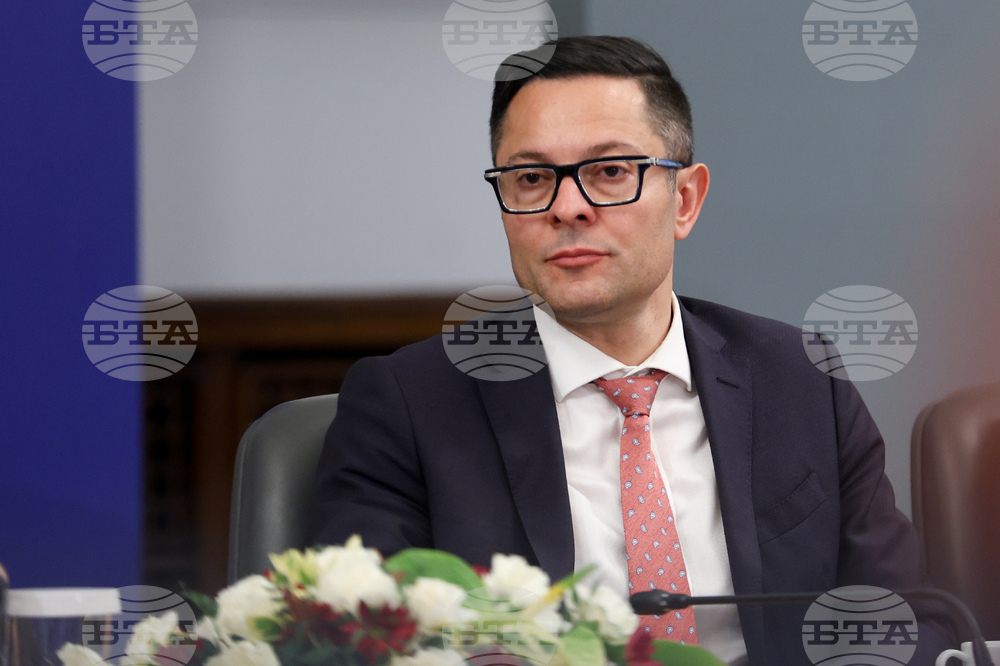
Deputy Prime Minister and Minister of Economy, Investment and Industry Alexander Poulev told National Radio on Sunday that the new government is determined to carry through with its campaign to enforce fair rules for traders and fight "unjustified" price increases.
"We are not at war with the retail chains. We are at war with unfair trading practices," Poulev said.
Price control
"As a government and as the party Progressive Bulgaria, we have declared strong support for the Bulgarian producer, rules that apply to everyone, and we will work tirelessly in this direction and will not bend to pressure from inside or outside," he said, affirming his resolve that this commitment to Bulgarian citizens will be fulfilled.
Poulev explained that the government does not aim to distort the market but to overcome a market anomaly and a market defect. "We want to see market prices with a normal markup that is fair and within 20-35%, which has been empirically proven by European statistics in the industry, not 130%. This is the spirit of the legislative amendments submitted to the National Assembly, aimed at tackling unjustified price increases and speculation."
Poulev went on to say: "We want to set rules that apply to everyone; we want the Bulgarian consumer to pay normal market prices. We do not ask the retail chains for socially responsible activity; we live in a democratic structure and state, and we want the retail chains to follow the rules."
The Deputy PM further explained that the aim is for the retail chains not to apply prices and markups three times higher than the levels they maintain in their home countries, and that their attitude towards the Bulgarian citizen and the government should be the same as towards their own shareholders. From this point of view come the 33 unfair trading practices defined in the heart of the government's legislative initiative, which, in his words, are "33 ways in which the retail chains systematically squeeze Bulgarian producers".
According to him, a unit is being created at government level to coordinate oversight and regulatory bodies. They will retain their independent profile and behaviour, he noted, expressing hope that regulators will become more active in strongly supporting Bulgarian producers and Bulgarian consumers.
The Deputy PM stated that he will expect results from the oversight bodies and regulators every week, and that every report submitted will be examined by the future coordinating unit.
Poulev further explained that another key direction for this unit will be the creation of a centre of competence, which will calculate every week the fair market price, making clear that it is not binding but shows the chains, the sector, and the Bulgarian consumer what the prices of the main food products should be in the absence of speculation, when there are no unfair trading practices, and when a normal markup is applied, one that is valid across Europe – from 20% to 35% depending on the food group and product. "Not 130% - this is absolutely unacceptable, and from this point of view the Prime Minister certainly sent the right message," Poulev stressed.
"The entire executive branch is in full support – the rules must be followed, whether we are talking about a small or medium business or a large international chain with an army of lobbyists that has historically pressured Bulgarian producers to a significant extent," he said.
Fuel costs
Poulev also said in the National Radio interview that the government is developing a package of 15 measures in connection with the rising fuel prices, which will soon be presented. He noted that the issue of fuel prices is very complex and added that there is geopolitical pressure which, in his words, is "tearing apart" the energy sector and the processes linked to it. "This does not apply only to Bulgaria, it is a regional and global problem," he stressed.
Regarding the planned package, Poulev explained that it concerns 15 detailed measures which have already been subject to initial informal dialogue with industry organizations and stakeholders, with a public discussion still to come.
The measures will be presented according to a cascading principle. "We will set out different forecast ranges for retail fuel prices at the pump and, depending on the expected price range, different measures will be activated or deactivated," Poulev explained.
The Deputy PM added that the measures will be grouped, starting with the most urgent ones aimed at the most vulnerable households, including people who do not use a personal vehicle but rely on public transport. Poulev said these include subsidized direct payments and subsidized season tickets for public transport, as well as measures aimed at pensioners, students and the most vulnerable members of society. After the most urgent measures, there will be a gradual scaling-up linked to support in the form of direct discounts for people who drive but fall into the so-called working poor category. These are people whose monthly income does not exceed two minimum wages, Poulev pointed out.
Besides the imported inflation that comes from geopolitical pressure related to the conflict in Iran, Poulev said that another front has opened in Bulgaria's fuel price crisis, linked to the price of the mandatory third-party liability insurance, which has risen sharply due to the liquidity problems of one of the main players on the market.
In this connection, Poulev noted an urgent meeting held with the transport sector a few days ago, where the united voice of the industry was heard that heavy-duty transport is directly losing competitiveness. "Many of these companies are not only key employers in the country; they are also regional and European leaders, and the rising price of third-party liability insurance policies directly undermines their competitiveness," Poulev said.
He added that a meeting was also held with the Ministry of Finance and representatives of the Financial Supervision Commission, where they agreed on a working instrument for the sector. It will be presented next week and will be implemented through the Bulgarian Export Insurance Agency.
/VE/
news.modal.header
news.modal.text