site.btaJoining European Stability Mechanism Will Boost Financial Stability, Trust in Bulgaria – ESM COO
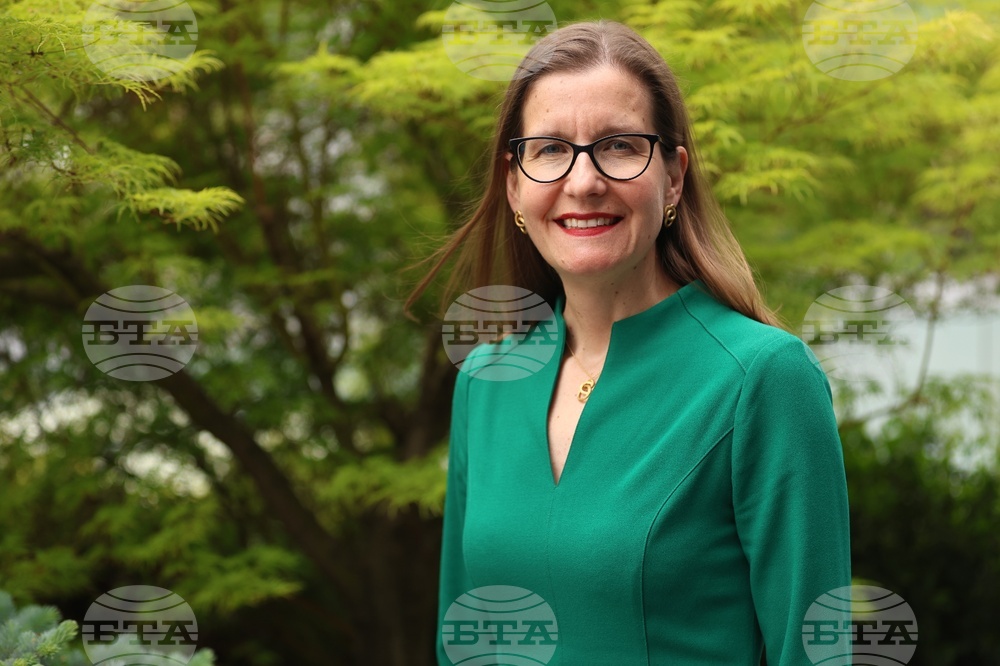
Joining the European Stability Mechanism (ESM) will contribute to financial stability and trust in Bulgaria, said Yana Djoneva, Chief Operating Officer (COO) and Member of the ESM's Management Board, in an interview for BTA taken during a financial forum in Sofia. Djoneva is in Sofia for the Money Growth: Bulgaria in the Eurozone organized by Capital.
She said that membership in the ESM is much more than a technical procedure related to the adoption of the euro, as it represents an important step in Bulgaria's integration into the core of the European Union.
"[...] the introduction of the euro is far more than a currency change. It is a historic choice. It marks Bulgaria's deepest integration into the European Union since its joining in 2007," said Djoneva.
She emphasized that joining the euro area and the ESM brings tangible benefits to Bulgaria, such as better financial stability, stronger trust from investors, and participation in the decision-making process concerning the future of Europe.
"In practice, this matters because it supports financial stability and helps maintain confidence in the country by keeping financing conditions stable for the government, and, ultimately, for banks, households and businesses," she said.
The ESM is the permanent safety mechanism for eurozone member states and serves as a financial safety net in times of crisis. All countries that adopt the euro become members of the ESM. Bulgaria has already completed the main steps toward accession. In September 2025, the country submitted its application for membership, and in December, the ESM Board of Governors officially approved the accession.
The procedure is currently in the national phase. On May 7, 2026, the caretaker government submitted the bill for ratification of the ESM Treaty to the National Assembly. It is pending review by parliamentary committees and the plenary session.
"The ESM Treaty is an international agreement that requires ratification by the National Assembly, and once that step is completed, the country's membership in the ESM will be finalized," said Djoneva.
She specified that Bulgaria's paid-in capital contribution will be around EUR 992 million, which will be about 1.2% of the ESM's paid-in capital. The capital contribution is not paid all at once but is spread over 12 years, with around EUR 120 million paid per year in the first five years.
"Importantly, Bulgaria will benefit from full ESM membership from day one, even though the payments are spread over time," she said.
Djoneva stressed that this capital is not used to finance loans to countries directly but serves as a guarantee that allows the ESM to raise funds on the markets at very low cost and then pass on those favourable conditions to countries, if support is needed.
Commenting on the impact of the conflict in the Middle East and financial stability in the euro area, Djoneva said: "Europe is particularly exposed to external shocks through energy, because a large share of its energy is imported. Even if the situation stabilizes relatively quickly, the economic impact will last longer [...]. And this is because, given the material damage to regional energy infrastructure, repairs and capacity restoration will take time."
She said that in times of uncertainty, financial stability frameworks become even more important and added: "Risks do not disappear, but they become easier to manage, because within the euro area there are stronger tools, deeper coordination, and more predictable financing conditions."
She pointed out that in the face of rapid technological change, the financial sector is also facing new challenges related to the development of artificial intelligence.
"[Artificial intelligence] is already changing the risk landscape in the financial sector. Risks can move faster and scale more quickly, and we are seeing a growing reliance on a small number of players, often outside Europe."
She said that European financial institutions and supervisors need to build their own expertise to understand these technologies first-hand and to assess the risks properly.
"The challenge for Europe is to capture the benefits, while managing the risks. That means mobilizing public and private capital across the EU to invest in our own AI infrastructure, technology companies, and skills [...]."
She added that AI alongside Distributed Ledger Technology/blockchain open new possibilities for banks to optimize their business models and boost their competitiveness by offering a wider range of services.
The full interview follows:
Bulgaria has been a member of the euro area for several months now, while you have been with the ESM since its establishment in 2012. How did this process look through the eyes of one of the most senior Bulgarian professionals in the European financial institutions?
When I joined the ESM more than a decade ago, one of my personal motivations was precisely to see Bulgaria become part of the euro area one day. To witness that moment from within a European institution, whose core mission is to safeguard and strengthen the euro area, is very special.
Because the introduction of the euro is far more than a currency change. It is a historic choice. It marks Bulgaria's deepest integration into the European Union since its joining in 2007.
And it brings very tangible benefits. First, prosperity, by supporting investment and economic opportunities over time. Second, stability, through a stronger and more resilient financial framework based on solidarity. And third, representation, because Bulgaria now has a seat at the table when decisions about Europe's financial future are taken.
So, for me, this is both a professional milestone and a personal one. It reflects a long-term effort by our country, and a clear commitment to being part of Europe's core.
As the ESM serves as one of the euro area's financial firewalls, and with the ratification process now moving to the Bulgarian Parliament, do you anticipate a smooth adoption? Furthermore, could you clarify the specific financial contribution Bulgaria will need to provide?
All countries who join the euro become members of the ESM. As you said, Bulgaria is currently finalizing the process to join the other 20 euro area countries and become a member itself.
The country has already taken the key steps: it applied to join the ESM in September 2025, and the ESM Board of Governors approved its membership in December 2025.
The ESM Treaty is an international agreement that requires ratification by the National Assembly, and once that step is completed, the country's membership in the ESM will be finalized.
At that moment, the first capital contribution will be made.
Bulgaria's paid-in capital contribution will be around EUR 992 million, which will be about 1.2% of the ESM's paid-in capital. The size of the contribution is determined on the basis of Bulgaria's population and its Gross Domestic Product. The capital contribution is not paid all at once. It is spread over 12 years, with around EUR 120 million paid per year in the first five years.
Importantly, Bulgaria will benefit from full ESM membership from day one, even though the payments are spread over time.
And it is worth clarifying one point: this capital is not used to finance loans to countries directly. It serves as a guarantee that allows the ESM to raise funds on the markets at very low cost and then pass on those favourable conditions to countries, if support is needed.
In practice, this matters because it supports financial stability and helps maintain confidence in the country by keeping financing conditions stable for the government, and, ultimately, for banks, households and businesses.
What are your observations regarding the impact of the conflict in the Middle East and financial stability in the euro area?
Europe is particularly exposed to external shocks through energy, because a large share of its energy is imported.
Even if the situation stabilizes relatively quickly, the economic impact will last longer, as ESM Managing Director Pierre Gramegna has pointed out. And this is because, given the material damage to regional energy infrastructure, repairs and capacity restoration will take time.
In that context, financial stability frameworks become even more important. Countries in the euro area benefit from a strong and coordinated system that helps manage risks and maintain confidence.
For Bulgaria, joining the euro area - and soon the ESM - is part of that. It means being part of a robust safety net. As the caretaker finance minister [Georgi Klisurski] said last week, the ESM is like a form of life insurance for Bulgaria's financial health and future financial security.
This becomes particularly visible in times of uncertainty.
Risks do not disappear, but they become easier to manage, because within the euro area there are stronger tools, deeper coordination, and more predictable financing conditions. And that stability is something that businesses, investors, and citizens can feel.
In an article co-authored with your colleagues and published on the ESM blog more than a year ago, you discussed the challenges and risks related to artificial intelligence in the financial sector. How do you assess the impact of these technologies today?
Over the last year, artificial intelligence has further proven itself as a powerful general-purpose technology. It has the potential to boost productivity and support innovation across Europe.
At the same time, it is already changing the risk landscape in the financial sector. Risks can move faster and scale more quickly, and we are seeing a growing reliance on a small number of players, often outside Europe. This raises important questions about access, control and dependency, especially in a more volatile geopolitical environment.
Financial institutions and supervisors need to build their own expertise to understand these technologies first-hand and to assess the risks properly. And that is not always straightforward, given how fast AI is evolving.
There is also an operational dimension, AI alongside Distributed Ledger Technology/blockchain open new possibilities for banks to optimize their business models and boost their competitiveness by offering a wider range of services.
The challenge for Europe is to capture the benefits, while managing the risks. That means mobilizing public and private capital across the EU to invest in our own AI infrastructure, technology companies, and skills, while at the same time strengthening international cooperation and governance to ensure the responsible use of these technologies.
The development and governance of AI matters for people as well, because these technologies will shape jobs, financial services, and how citizens interact with the economy in the years ahead.
Yana Djoneva is COO and Member of the Management Board of the ESM. Together with her fellow Management Board members, she steers the ESM's strategic direction and operations, ensuring the institution remains effective and resilient in safeguarding euro area financial stability.
As COO, Djoneva leads the ESM's innovation agenda and oversees the strategic adoption of Artificial Intelligence across the organization.
Djoneva joined the ESM at its inception and since 2013 has played a key role in its institutional development. She has contributed to the design and implementation of many of the ESM's internal policies, procedures, and operational frameworks, working closely with euro area member states and peer institutions.
She told BTA that she perceives Bulgaria's joining the euro area both as a professional milestone and a personal one. "It reflects a long-term effort by our country, and a clear commitment to being part of Europe's core."
Prior to joining the ESM, Djoneva worked at the European Bank for Reconstruction and Development and Coca Cola HBC, among other organizations.
Djoneva holds an MBA from London Business School, a master's degree in European law from Université de Lorraine, and a law degree from Sofia University.
She holds a Master of Business Administration from London Business School, a Master's degree in European Law from Universite de Lorraine, and a law degree from Sofia University.
/RY/
news.modal.header
news.modal.text