site.btaReport: Armed Forces Personnel Shortage Stood at 20.5% in 2025
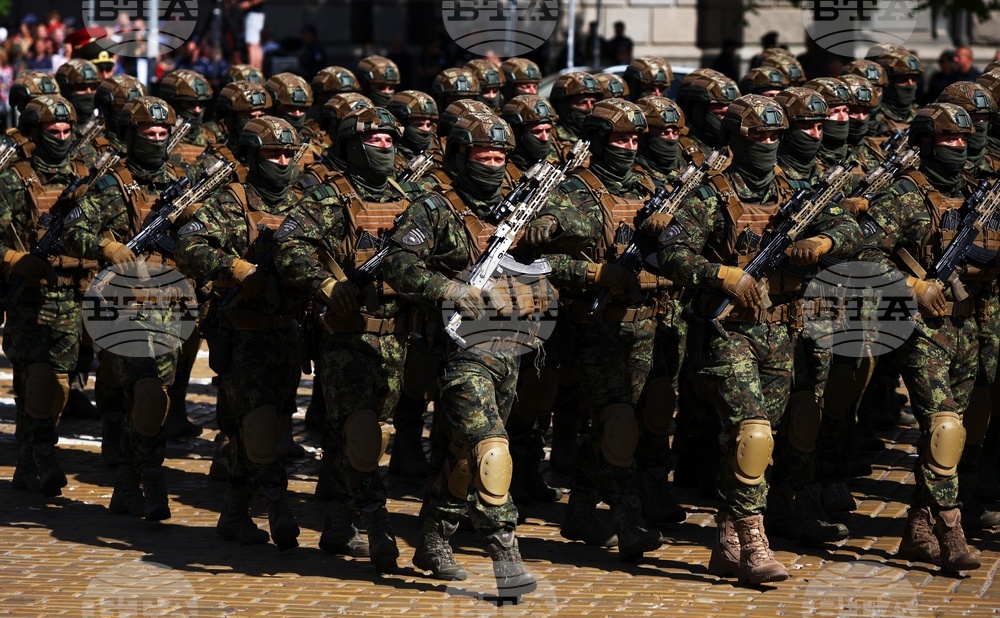
In 2025, the shortage of military personnel decreased by 1.8% and reached 20.5%, according to the Report on the State of Defence and the Armed Forces, approved by the caretaker government on April 1.
Despite the measures taken, vacant positions for military personnel remained close to those in 2024, with the percentage of unfilled posts continuing to be high, the document states.
The most serious challenge facing the country’s defence, with long-term consequences, remains its adequate funding, the report concludes.
Personnel Shortage
In the Bulgarian Armed Forces, personnel shortage stand at 20%, with 26.8% among officers, 10.7% among officer candidates, 11.3% among sergeants/chief sergeants, and 23.9% among soldiers/sailors.
The most significant decrease is observed among soldiers – by 4.3%, and among guards – by over 10%.
At the end of 2025, the staffing level of the voluntary reserve remains critically low at just 18.6%, with only 558 Bulgarian citizens serving in the reserve out of the 3,000 planned under Programme 2032.
Recruitment competitions show increased interest in joining military service. By the end of 2025, 23 recruitment competitions were completed for 1,975 soldier positions, with 1,290 soldiers appointed to service. A total of 65% of the announced vacant soldier positions were filled.
On average, there were four candidates per position, with the lowest interest seen in the National Guard unit - one candidate per position.
The increase in the salaries of military personnel is already showing signs of slowing the outflow of servicemen and attracting new candidates. However, more time is needed to assess its full effect. The main factors negatively affecting the recruitment and selection process include the deteriorating health of the population, the insufficient quality of education received, and the unsatisfactory physical fitness of some candidates, the Report on the State of Defence and the Armed Forces states.
The document also notes that there are difficulties in recruiting citizens for service in the voluntary reserve, mainly due to the complicated international environment and inadequate medical requirements for older candidates.
Defence Expenditure
In 2025, reported defence expenditures amounted to BGN 4.8 billion, or 2.13% of GDP.
The achieved level of 2% of GDP allocated to defence is considered highly insufficient for fulfilling the priorities of defence policy, and it is necessary for it to continue to increase gradually in line with the allied commitment made at the Hague Summit and in accordance with the draft National Plan to raise defence spending to 5% of GDP by 2035, of which 3.5% would constitute core defence spending. This would enable the successful fulfilment of NATO Capability Targets, the document states.
The planning and implementation of investment projects for the acquisition, development, and maintenance of defence capabilities were carried out in accordance with Programme 2032 and the Defence Investment Programme up to 2032. A new instrument for implementing investment projects is SAFE.
In 2025, the first eight F-16 Block 70 aircraft were delivered. Work continued under the contract with Naval Vessels Lurssen (NVL) for the acquisition of two multifunctional modular patrol vessels. In December, the first ship, Hrabri, was commissioned into the Navy, while the second was launched and is at an advanced stage of equipment and weapons installation. Work also continued on the project for the acquisition of medium- to long-range surface-to-air missile systems, as well as new three-dimensional radars.
Security Environment
The security environment was characterized by increasing confrontation between leading states, as well as regional and global alliances. Global processes were dominated by the war in Ukraine, tensions in the Middle East, competition for control over supply chains, and access to key resources and emerging technologies. The escalation of ongoing conflicts and the emergence of new hotspots reinforced the trend toward the militarization of international relations.
Russia remained the main destabilizing factor. Its full-scale war against Ukraine generated the most significant and complex security threats in Europe. The risk of Russian subversive activities and sabotage also increased, the report notes.
In a fundamentally changed strategic environment and amid growing military threats to security, defence should remain at the core of national security policy, with the necessary resource and political support from the government, parliament, and Bulgarian society, the report further states.
/PP/
news.modal.header
news.modal.text