site.btaArchaeologists Discover Coins, Ancient Building, Burial Sites During Excavations in Plovdiv

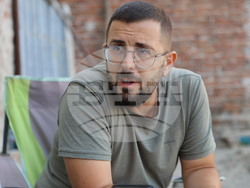
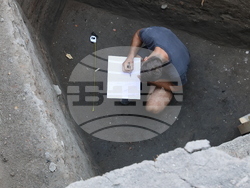
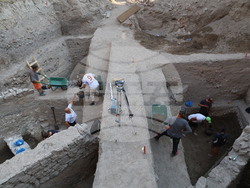
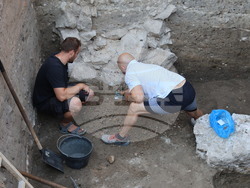
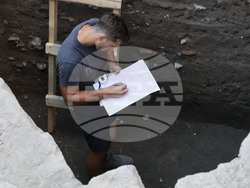
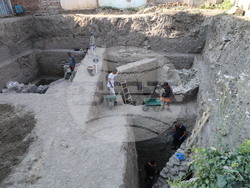
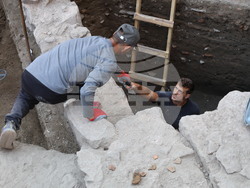
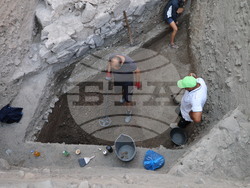
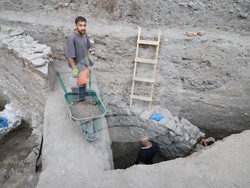
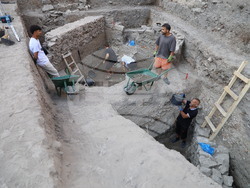
More than 200 coins, mostly from the Constantine dynasty, were discovered by archaeologists during rescue excavations at a site located right next to the Eastern Gate of Philippopolis in Plovdiv. The coins are from the Late Antique era, when a neighborhood flourished outside the fortress walls, the head of the excavations, Lyubomir Merdzhanov, told BTA on Thursday. The team of the Regional Archaeological Museum in Plovdiv is conducting the excavations in connection with an investment intention to build a new residential building in the area.
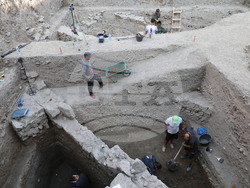
In addition to the coins, a building from Late Antiquity has also been discovered, the archaeologist said. It is still unclear what its function was, but it will be established during the excavations.
Merdzhanov added that there are two burials from the middle of the 7th century, which intersect the Late Antiquity structure. Both have grave goods. One has a silver buckle, and the other - with an unrecognizable bronze object at the moment, which will be determined after restoration. What is interesting, according to the specialist, is that although the burials are from the Christian period of Philippopolis, the orientation of the deceased's body is south - north. The burials were carried out after the buildings from Late Antiquity ceased to function. This means that at that time this part of the city changed its character and this now empty space was used as a necropolis, the archaeologist explained.
"Unfortunately, as always happens with multi-layered sites, each subsequent historical site destroyed the previous one. Therefore, all archaeological layers and structures are in very poor condition. Thanks to the team's diligence, we managed to identify the trenches from the walls and restore the layout despite the lack of walls and floor levels, which carry the basic information," said Merdzhanov.
The specialists have information from previous studies that the area was intensively inhabited during the Hellenistic era. Excavations are about to reveal whether such cultural layers exist at this site as well. So far, six meters of depth have been reached in parts of it. This is standard for Plovdiv, because the cultural layers are very deep, said Merdzhanov, adding that there is another sector in the site that needs to be explored by the end of the month.
/NZ/
Additional




news.modal.image.header
news.modal.image.text
news.modal.download.header
news.modal.download.text
news.modal.header
news.modal.text