site.btaProfessors, Students, Pensioners among Those Studying Bulgarian at University of Freiburg, Prof. Koleva-Zlateva Tells BTA
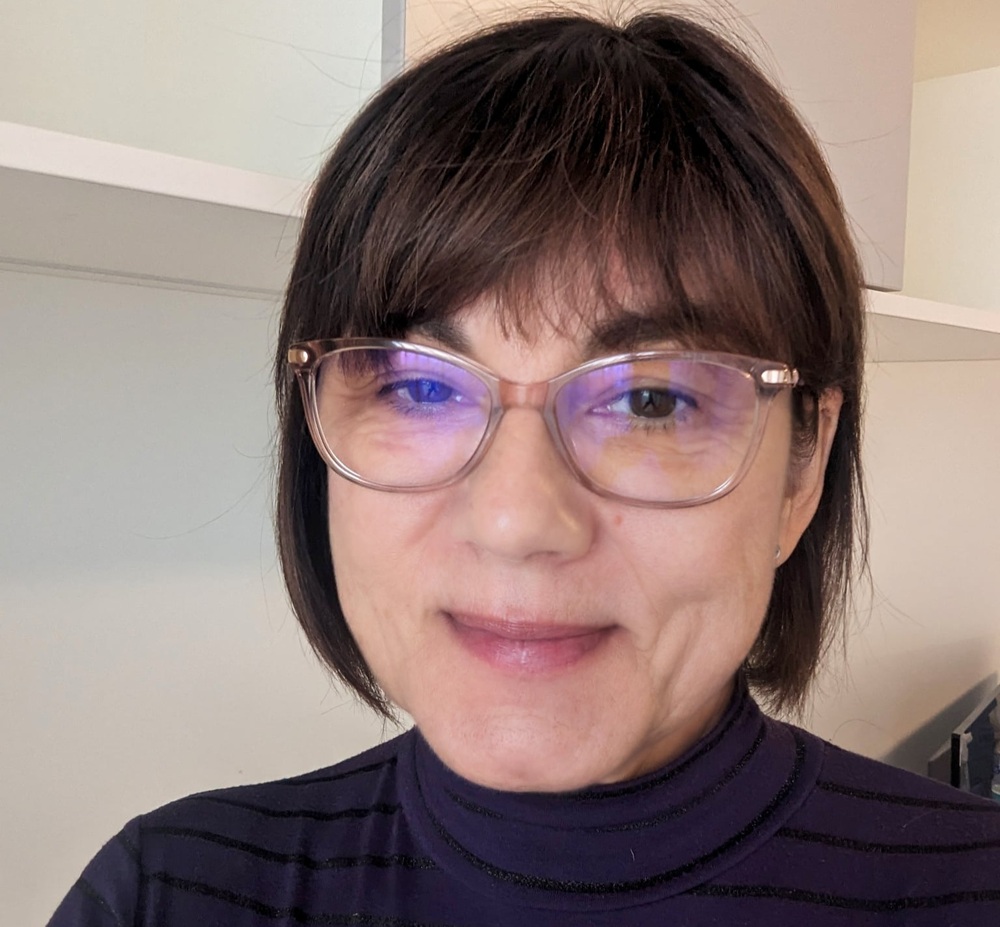
Professors, students, and pensioners are among those studying Bulgarian at the Albert Ludwig University of Freiburg in the 2025/2026 academic year, said in an interview with BTA Prof. Zhivka Koleva-Zlateva, who is a lecturer in Bulgarian language, literature, and culture at the university.
"The range of my students – in terms of their main activities, age and ethnicity – is extremely wide. It includes students from Bachelor’s programmes in Slavic Studies and other philological specialties, among whom there are also young people from Romania, Russia and North Macedonia. Among the students are also a student from France under the Erasmus+ programme, a PhD student in linguistics from Canada, an employee of the university, as well as a professor of general linguistics from the University of Sao Paulo, Brazil, who is a guest lecturer in the Department of Linguistics during the summer semester, said Koleva-Zlateva.
She added that there is also a strong presence of students from the “guest” category - citizens who, for a small fee, can attend various university courses, including Bulgarian language classes. According to her, this diverse group of students studying Bulgarian at the University of Freiburg shows how the principle of lifelong learning works in practice - a key strategic element in the educational policy of many higher education institutions in Europe and beyond. There are no boundaries for those seeking new knowledge, she said.
Prof. Koleva-Zlateva described her work with students as extremely inspiring, creative and highly motivating. "They all learn Bulgarian with desire and interest. They always have questions about the details – either about the forms of words, when the common root is obscured by historical phonetic changes, or about their semantics and usage. They like to draw parallels with the languages they speak. I am glad to note that all the students are multilingual and the Bulgarian language is another linguistic picture of the world for them, as they say in linguistics," she added.
According to her, an important emphasis in this regard is the fact that artificial intelligence (AI) is now an active player in the field of intercultural communication. She explained that because it learns by processing written texts, AI shows deficits in terms of the pragmatic aspect of language use, which takes into account the situational context. She added that due to the lack of real cognitive abilities, the feeling that a person experiences when learning a new language is alien to it. She believes the role of humans as mediators in intercultural communication cannot be completely replaced by artificial intelligence.
"That is why, when I teach Bulgarian to students, in addition to the mandatory application of methods and approaches that ensure easy and successful acquisition of the language, I also pay special attention to the situational context - and this means the pragmatic conditioning of language use," she noted.
Prof. Koleva-Zlateva also said that when translating, artificial intelligence does not take into account the differences in the pictures of the world that individual languages create. These differences may be due to different cognitive and cultural experience and may manifest themselves through different motivations of words for the same object, as well as through their association with different ideas. She gave the example of a German student responding to the question "Where do you like to walk?" with, “I like to walk in the vineyards." While natural in German, this answer sounds unusual in a Bulgarian context. She explained that in Southern Germany, vineyards are often located on scenic hills and are associated with leisure walks and attractive views. The German word Weinberg (“vineyard”) combines Wein (“wine”) and Berg (“hill; mountain”), reinforcing these associations. In Bulgarian, however, a vineyard is traditionally linked to agricultural labour - digging, pruning, spraying, and harvesting grapes. According to her, such examples arise constantly during the learning process.
"They bring invisible cultural differences to the surface. This way, students get used to subjecting words to cultural reading. This skill remains irreplaceable - in this indicator, machines still lag behind humans," concluded Prof. Koleva-Zlateva.
/RY/
news.modal.header
news.modal.text