site.btaKosovo Votes in Snap Elections amid Suspended Strategic Dialogue with US, Unclear Future Coalitions
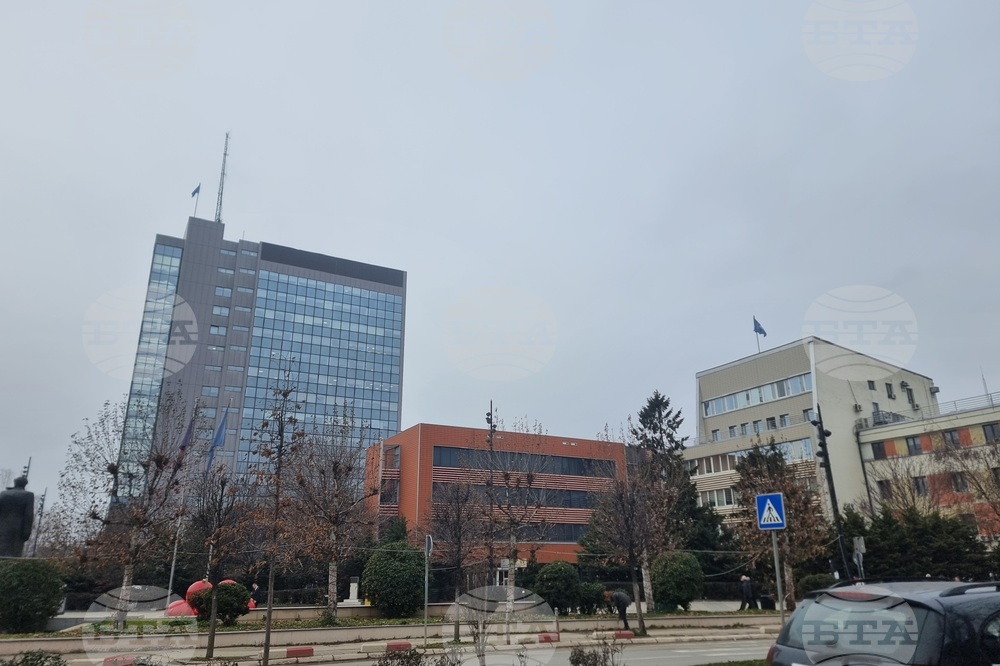
Kosovo’s citizens are voting on Sunday in parliamentary elections for the second time this year. The snap vote follows the regular parliamentary elections held on February 9, 2025, which resulted in an institutional and political deadlock and the inability to form a government.
The elections are taking place against the backdrop of a suspended strategic dialogue with the United States, which Kosovo considers its main partner and ally, unclear future coalition prospects, and concerns over a new political crisis.
From Regular to Snap Parliamentary Elections
Following the February parliamentary elections, none of the parties secured the required majority of 61 seats in the 120-member Assembly. As a result, none of the candidates for Speaker obtained sufficient support, and the work of the legislature was blocked.
Nearly seven months after the elections and after 57 unsuccessful attempts to constitute the Assembly, on August 26 Dimall Basha of the ruling left-wing Vetevendosje Movement (LVV) was elected Speaker, along with four of the five deputy speakers (three from the largest parliamentary parties and one representing the Bosniak community).
After further blockage, the fifth deputy speaker, constitutionally required to be from the Serb community, was elected on October 10, eight months after the elections, officially constituting the Assembly. This opened the way for government-formation efforts by the largest political force, Vetëvendosje, and Prime Minister Albin Kurti as the first mandate holder.
After Vetevendosje exhausted the two constitutionally permitted attempts to form a cabinet without success, Kosovo moved toward snap elections.
Suspended Dialogue with the United States
On September 12, the United States announced the suspension of its strategic dialogue with Kosovo for an indefinite period. In a statement, the US Embassy said Washington had taken the drastic step due to concerns over actions by the caretaker government in Pristina that had increased tensions and instability and limited the US ability to work productively with Kosovo on shared priorities.
The embassy cited "recent actions and statements by caretaker Prime Minister Albin Kurti" that had "called into question years of progress", without providing further details.
In recent years, Kurti has been criticised by Kosovo’s international partners over decisions affecting northern Kosovo, a region predominantly populated by ethnic Serbs. These included replacing Serbian licence plates with Kosovo ones, removing the Serbian dinar as legal tender, and closing institutions operating under the Serbian system, Radio Free Europe’s Albanian service recalls.
Unclear Coalitions, Fears of New Crisis
According to Kosovo’s Central Election Commission, 24 political entities with a total of 1,180 candidates are contesting Sunday’s vote.
The main contest is among the four largest ethnic Albanian political parties: the ruling left-wing nationalist Vetevendosje Movement (LVV) led by Prime Minister Albin Kurti; the centre-right Democratic Party of Kosovo (PDK) led by Bedri Hamza; the centre-right Democratic League of Kosovo (LDK) led by Lumir Abdixhiku; and the right-wing Alliance for the Future of Kosovo (AAK) led by former prime minister Ramush Haradinaj.
All four party leaders are also their respective candidates for prime minister. The only change compared with the February elections is that PDK’s prime-ministerial candidate Bedri Hamza was elected party leader in November after Memli Krasniqi resigned.
LDK, PDK and AAK leaders repeatedly stated after the February elections that they did not wish to cooperate with Kurti and his party.
After becoming PDK leader, Hamza said he had no red lines toward any political force. "We must act responsibly in Kosovo’s interests and always take the necessary steps for the good of the state," he said.
Despite such statements, coalition arrangements under a potentially fragmented parliament remain unclear. Media outlets have warned that failure to secure a majority again could push Kosovo into yet another round of snap elections.
Expectations
Kosovo has seen very few official opinion polls ahead of Sunday’s vote.
According to a survey commissioned by the daily Sinjali, Vetevendosje is expected to come first with 56% support, followed by PDK with 25%, LDK with 15%, and AAK with 3%.
In the February elections, Vetevendosje won 48 seats, PDK 24, LDK 20, the AAK-led coalition 5, and the centre-left Nisma 3.
Minority communities are guaranteed 20 seats in the Assembly regardless of the 5% threshold - 10 for Serbs and 10 for Turks, Bosniaks, Roma, Ashkali, Egyptians and Gorani.
In February, the largest Kosovo Serb party, Srpska Lista, won 9 of the 10 reserved Serb seats. The remaining seat went to Nenad Rasic’s Civic Initiative "For Freedom, Justice and Survival" (ZSPO).
Srpska Lista won in all ten Serb-majority municipalities in local elections held in two rounds in October and November 2025 and is expected to perform even stronger in Sunday’s parliamentary vote.
The snap elections are expected to test public trust in Kosovo’s political forces compared with the regular elections earlier this year and to set the country’s political direction for the next four years.
/YV/
news.modal.header
news.modal.text