site.btaTurkiye’s Year at a Glance: Large-Scale Investigations Against the Opposition and PKK Reconciliation Dominate Politics
Among the many topics that dominated the Turkish media landscape in 2025, two developments stood out and continue to dominate the country’s agenda - and will likely remain central in 2026: the sweeping corruption investigations targeting members of the opposition Republican People’s Party (CHP) and the reconciliation process between Ankara and the Kurdistan Workers’ Party (PKK).
LARGE-SCALE INVESTIGATIONS AGAINST THE OPPOSITION
In early March, Istanbul’s mayor Ekrem Imamoglu announced his unofficial candidacy for Turkiye's 2028 presidential election on social media. His announcement came amid repeated calls by the CHP - of which he is a member - for early elections. At the time (and to an extent even now), many political analysts in and outside Turkiye viewed Imamoglu as President Recep Tayyip Erdogan’s main potential challenger.
On March 18, just days after his announcement, Istanbul University annulled Imamoglu’s university diploma at the request of the Istanbul Chief Prosecutor’s Office, citing doubts about its legitimacy related to his transfer in the 1990s from a university in the Turkish-occupied northern part of Cyprus. The annulment raised questions about his eligibility to remain mayor and to run for president.
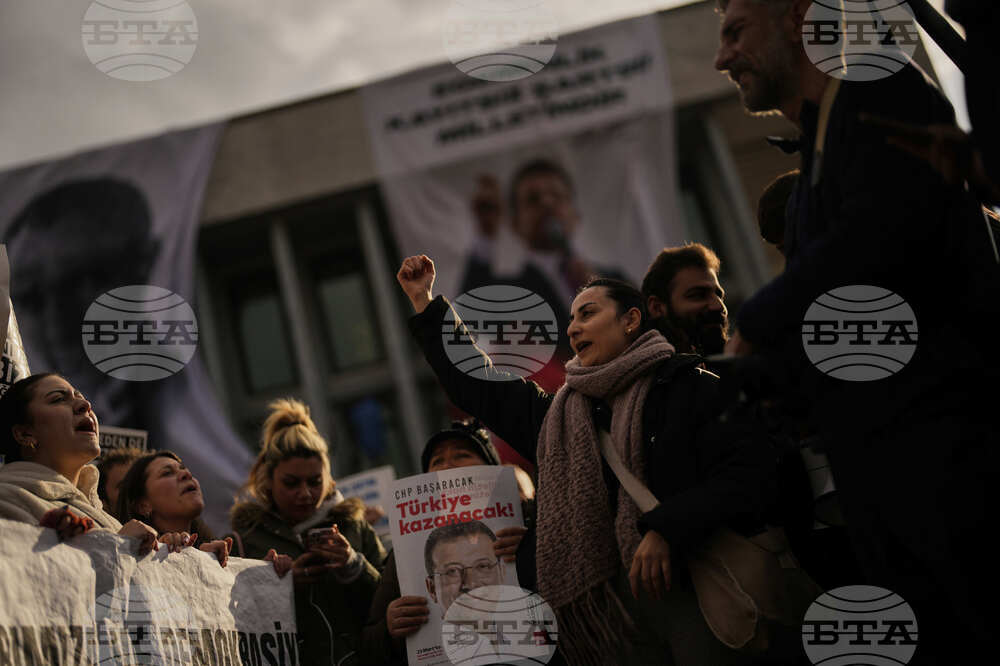
A day later, on March 19, Imamoglu and several CHP municipal officials were arrested as part of a broad corruption probe into the Istanbul Metropolitan Municipality. The arrests triggered the largest protests in Turkiye since 2013. Temporary bans on public gatherings were imposed in major cities, and dozens of protesters were detained. Several journalists were also arrested, and BBC correspondent Mark Lowen was expelled from the country.
Many international observers and Western European governments voiced concern about the situation and Imamoglu’s arrest. CHP leader Ozgur Ozel condemned the detentions and launched weekly mass rallies across Istanbul and other cities. The CHP also held an extraordinary congress, re-electing Ozel as its leader. Meanwhile, allegations emerged in the Turkish media questioning the legitimacy of Ozel’s own election at the CHP congress in 2023, and some party members filed a lawsuit to annul the congress, directly challenging the validity of Ozel’s decisions in recent years.
In July, as protest momentum waned, authorities initiated new investigations targeting opposition-run municipalities. Within two weeks, the mayors of Adana (Zeydan Karalar), Adiyaman (Abdurrahman Tutdere), Antalya (Muhittin Bocek), and Istanbul’s Şile district (Ozgur Kabadayi), along with 130 others including former Izmir mayor Tunc Soyer, were detained on corruption charges. The arrests prompted renewed CHP criticism, with its MPs issuing a joint declaration expressing concern about the erosion of democratic norms.
In September, the authorities escalated pressure further when an Istanbul court annulled the CHP’s 2023 district conference in Istanbul, dismissed the local leadership, and appointed a trustee and a five-member interim administration. The decision caused significant internal tension, and when the trustee arrived at the party office, clashes erupted between CHP supporters and police, who used tear gas to disperse the crowd. The CHP convened another extraordinary congress, again re-electing Ozel, and appealed the court’s decision - but in November the court rejected the appeal, confirming the interim leadership.
Also in November, a court postponed until January 13, 2026 the case seeking to annul the CHP’s 2023 regular congress over alleged electoral irregularities, giving the party “a breath of air.” Days later, prosecutors announced their indictment in the Istanbul corruption case, seeking a prison sentence of nearly 2,400 years for Imamoglu. The CHP called the indictment “politically motivated” and proposed that the trial be broadcast live on state television TRT - a proposal Parliament did not consider.
At the end of November, the CHP held a regular congress in Ankara, once again electing Ozel as leader and adopting its first new party program in 17 years.
For now, Imamoglu and many others detained throughout the year remain in custody awaiting verdicts, while the opposition continues to demand their immediate release.
TERROR-FREE TURKIYE PROCESS
In October 2024, Devlet Bahceli, leader of the Nationalist Movement Party (MHP) and President Erdogan’s main political ally, unexpectedly offered an “olive branch” to the imprisoned Kurdish rebel leader Abdullah Ocalan. He called on Ocalan to renounce terrorism and dissolve the PKK, the organization that has waged an armed insurgency against Turkish authorities for decades.
Late last year, for the first time in nearly a decade, a delegation from the pro-Kurdish DEM Party visited Ocalan in Imrali Prison, launching a reconciliation process between the PKK and the state that later became known as “terror-free Turkiye”.
Delegations from the DEM Party continued their visits in early 2025. During one of them, Ocalan addressed the PKK, saying: “Convene your congress and make a decision; all groups must lay down their arms, and the PKK must dissolve itself.”
The statement was widely seen as historic, reviving hopes for an end to the decades-long conflict.
In early May, the PKK announced that it had heeded Ocalan’s call, convened a congress, and formally dissolved itself - ending more than 40 years of armed struggle that claimed over 50,000 lives.
In response, the Turkish government created a mechanism for the phased disarmament of PKK fighters, and Parliament formed a special commission to oversee the process and draft legal frameworks for a political solution to the Kurdish question, with a deadline at the end of the year.
In July, a group of PKK fighters participated in a weapons-handover ceremony near Sulaymaniyah in northern Iraq - a step Turkish authorities described as “crucial” for cleansing Turkiye of terrorism. Meanwhile, DEM delegations continued visiting Ocalan, and in October they met with President Erdogan.
At the end of October, PKK fighters announced they had fully withdrawn from Turkiye’s territory, and weeks later said they had also pulled back from strategic positions in northern Iraq to support the peace process. In Parliament, debate intensified over whether members of the disarmament commission should visit Ocalan, and Bahceli expressed willingness to go himself if no one else would.
Ultimately, three MPs visited Ocalan in late November, and Bahceli hailed the meeting as “historic progress” for terror-free Turkiye, though few details of the talks emerged in the media.
For now, Turkish outlets report that the commission is preparing its final report on the PKK disarmament process, while calls for Ocalan’s release - from PKK commanders, lawyers, and analysts - are growing both in Turkiye and abroad.
/NF/
news.modal.header
news.modal.text