site.btaDemocratic Bulgaria Declaration: If There Is No Debate, Oversight of Those in Power in Parliament, Democracy Has No Substance
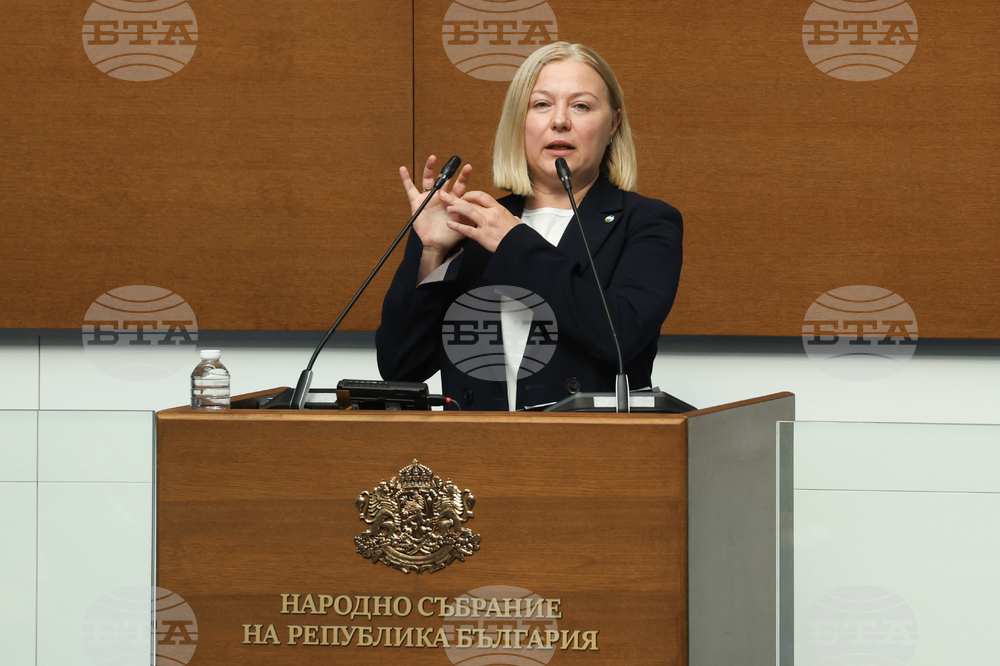
On Wednesday, in a declaration read out from the parliamentary rostrum, on behalf of Democratic Bulgaria (DB), the parliamentary group’s Floor Leader Nadejda Iordanova said "Parliament is not merely a place where the majority simply counts its votes, it is the place where those in power must be held accountable and provide answers. If there is no real debate and oversight of those in power here, democracy is emptied of its substance."
The reason for the declaration is the proposals of the ruling Progressive Bulgaria party for changes to the rules of procedure of the National Assembly, to which the opposition reacted negatively on Tuesday. A meeting of the ad hoc committee tasked with drafting the rules of procedure is scheduled for Wednesday.
"The ruling party is proposing changes to the rules that restrict the opposition’s rights in a way that previous majorities did not dare to do," Iordanova noted. The timeframes for reviewing bills before committee and plenary sessions are being shortened. According to DB, an attempt is being made to rewrite the rules of procedure themselves so that "yesterday’s outrage becomes the rules of procedure". "The message is clear, the opposition should not think, ask questions, work on a position, or interfere with the pre-written scenario," Iordanova read.
"The opposition’s legislative initiatives are also affected," she added, "it is all too easy for a bill proposed by the opposition to be completely ignored, not because it is weak, but because those in power do not want to hold a public debate on it. But the opposition is not merely for show," the statement said. "The opposition represents hundreds of thousands of citizens who have the right to have their voices heard. When the opposition’s rights are restricted, it is not the lawmakers who are punished, but the citizens," DB’s statement said.
Particularly alarming, according to them, is the attack on the ad hoc inquiry committees. "They are not a political extra, but an instrument of democratic accountability. A place where parliament can request documents, hear from officials, and raise questions about corruption, conflicts of interest, and institutional decay."
"The proposal that 48 signatures would be required to establish an ad hoc committee effectively deprives the opposition of the ability to put serious issues on the agenda on its own," Iordanova said. In her view, limiting committees and hearings to opposition day also renders one of the few mechanisms for real parliamentary oversight meaningless.
"This means more opportunities to conceal, delay, and evade responsibility. The minister does not come to parliament out of goodwill, but because the executive branch is accountable to the National Assembly," Iordanova pointed out. She warned that the most dangerous aspect is the removal of the obligation for institutions to provide documents to MPs. "Without access to information, there is no oversight, without oversight, there is no accountability," Iordanova said. "Transparency," in her words, "is not achieved through press releases, but through questions, documents, committees, and hearings, and the opposition’s right to demand answers and to investigate how institutions allowed such dependencies to arise, because the public knew more than the state did. This is not a technical dispute over parliamentary time, it is a dispute over political will," the declaration read.
"In previous parliaments, we saw how silence prevailed on issues related to the influence of Delyan Peevski. Today we see an attempt to turn that silence into a rule," Iordanova said. "A captured state is not liberated through convenient procedural restrictions," she added.
"Is the National Assembly capable of looking straight at the facts? The issue we face is not a technical one. It is a question of what kind of parliament we want, a parliament in which the majority wins votes but does not stifle debate, or one in which the rules of procedure are used to silence the opposition," the statement noted.
"Do not confuse having a majority with the right to act without accountability. Power in a democracy is never the property of the ruling majority," DB warned.
"Fellow ruling party members, this is not your parliament. The opposition is not here to obstruct, it is here to ask uncomfortable questions, to defend citizens, and to remind everyone that democracy exists only where there is debate, transparency, and accountability," Iordanova said.
DB insists that the rules of procedure of the National Assembly should not be turned into a tool for restricting the opposition, and that real guarantees for parliamentary oversight and hearings, ad hoc committees, access to documents, and the right to legislative initiative be preserved. The ruling majority’s power is temporary, the statement read.
/YV/
news.modal.header
news.modal.text